What Is Decentralization? A Complete Guide for Beginners
Decentralization is one of the most important concepts in the world of cryptocurrencies and blockchain technology. It is also one of the concepts that can be the most difficult to understand at first.
When we hear the word “decentralization,” we often think about Bitcoin, blockchain networks, and the idea of operating without banks or central authorities. But decentralization is much broader than simply removing a middleman. It refers to how control, decision-making, information, and responsibilities are distributed across a network.
In traditional systems, important decisions and data are often controlled by a central organization. A bank manages accounts and transactions, a company manages its servers, and a government manages certain public systems. In a decentralized system, some of these functions can be distributed among multiple participants.
This article explains what decentralization is, how it works, why it is important for cryptocurrencies, its advantages and disadvantages, and how to determine whether a blockchain network is truly decentralized.
What Does Decentralization Mean?
Decentralization means distributing control, authority, or responsibility among multiple participants instead of concentrating it in a single central entity.
To understand the difference, imagine a traditional bank account.
When you have money in a bank, the bank maintains the records of your account. The bank processes transactions, manages its infrastructure, and establishes many of the rules governing its services.
You interact with the bank, but you do not directly control the bank’s database.
A decentralized cryptocurrency network takes a different approach.
Instead of one company maintaining the entire transaction history, multiple computers and participants can contribute to maintaining and verifying the network.
This does not mean that everyone has exactly the same role. Different participants can have different responsibilities. The important point is that control is not necessarily concentrated in a single organization.
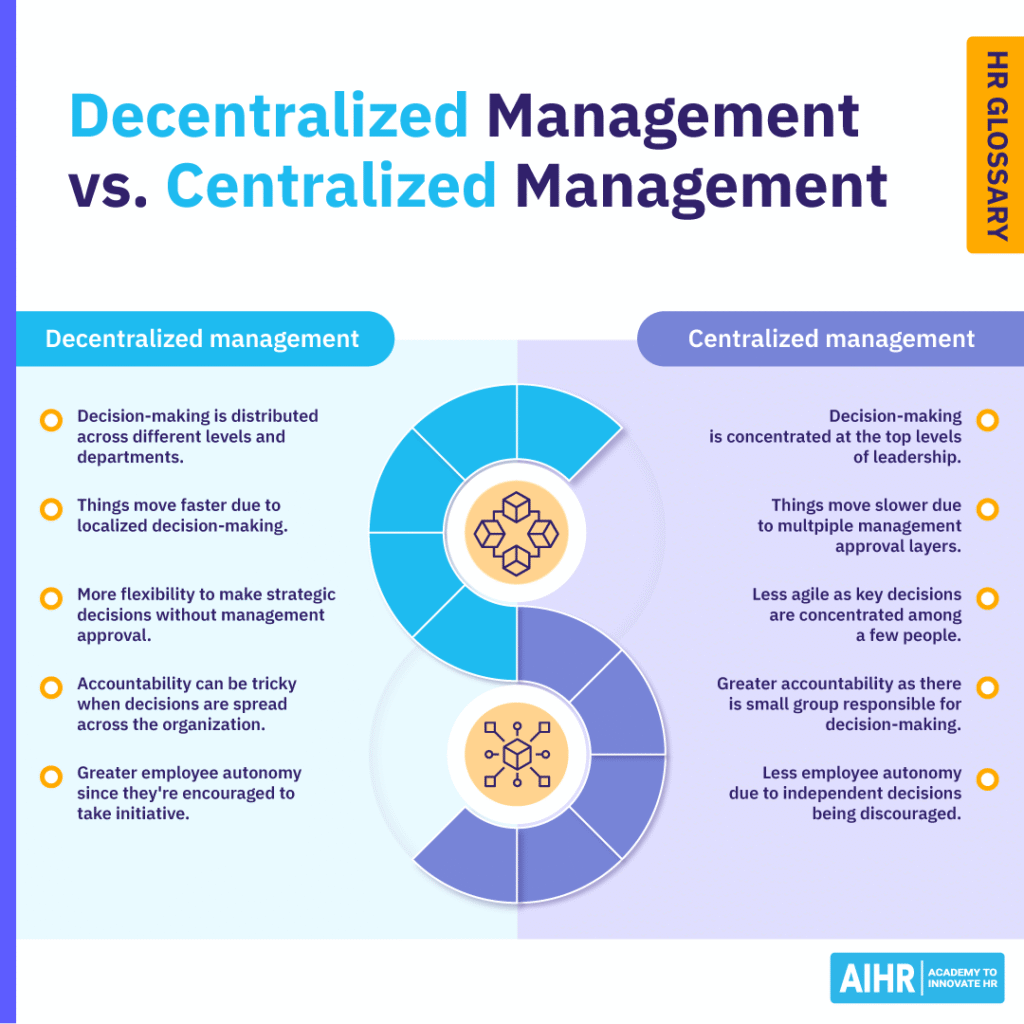
Centralized vs. Decentralized Systems
The easiest way to understand decentralization is by comparing it with centralization.
In a centralized system, one organization or authority has significant control over the infrastructure and decision-making process.
For example, a traditional payment company can determine whether a transaction is approved according to its rules.
In a decentralized system, control is distributed across multiple participants.
Instead of relying entirely on a central authority, participants can use predefined protocols and consensus mechanisms to coordinate the network.
Neither model is automatically better in every situation.
Centralized systems can be efficient, easier to manage, and easier to regulate. Decentralized systems can offer greater distribution of control and reduce dependence on a single organization.
The appropriate model depends on the problem being solved.
Why Is Decentralization Important for Cryptocurrencies?
Decentralization is closely connected to the original idea behind cryptocurrencies.
Bitcoin was created as a peer-to-peer electronic cash system that could operate without relying on a traditional financial intermediary.
Instead of requiring a bank to maintain a central database of balances, Bitcoin uses a distributed network and a consensus mechanism to maintain its transaction history.
This architecture means that no single bank or company is responsible for approving every transaction.
Users interact with the network through software, cryptographic keys, and predefined rules.
This is one of the fundamental differences between cryptocurrencies and traditional financial systems.
How Does Decentralization Work?
Decentralization can be achieved through several technical and organizational mechanisms.
In blockchain networks, one important element is the existence of multiple nodes.
Nodes are computers that participate in the network. Depending on the blockchain, they can store transaction data, verify transactions, communicate with other nodes, or perform other functions.
The more distributed these participants are, the less dependent the network may be on a single physical location or organization.
Another important element is the consensus mechanism.
Consensus mechanisms allow network participants to agree on which transactions are valid and what the current state of the blockchain should be.
Bitcoin uses Proof of Work, while many other blockchain networks use Proof of Stake or alternative mechanisms.
The Role of Nodes in Decentralization
Nodes play an important role in maintaining decentralized blockchain networks.
Imagine that a blockchain had only one computer maintaining its entire transaction history. That system would be much more centralized because the computer would represent a single point of control and failure.
Now imagine that thousands of independent computers around the world maintain and verify the network.
Taking control of the entire system becomes significantly more difficult.
This distribution can make the network more resistant to certain failures and attempts at centralized control.
However, simply having many nodes does not automatically make a blockchain highly decentralized. The geographic distribution, ownership, hardware requirements, influence, and economic incentives of those nodes also matter.
Is Bitcoin Decentralized?
Bitcoin is generally considered one of the most decentralized major blockchain networks.
Its infrastructure is distributed across many participants, and no single company directly controls the Bitcoin protocol or the global transaction ledger.
Bitcoin’s Proof of Work system also distributes the process of block production among miners.
However, decentralization is not an absolute characteristic.
It exists on a spectrum and can be measured in different ways.
For example, we can look at the distribution of mining power, the number and geographic distribution of nodes, the development process, ownership of coins, and the ability of different participants to influence changes to the protocol.
Therefore, it is more useful to ask “How decentralized is this network?” rather than simply asking whether it is decentralized or centralized.
Different Types of Decentralization
Decentralization can exist at different levels.
Network Decentralization
Network decentralization refers to how distributed the computers participating in a blockchain are.
A network with participants spread across many countries and organizations may be less dependent on a single physical location.
Governance Decentralization
Governance decentralization refers to how decisions about the future of a project are made.
In some projects, decisions can be strongly influenced by a small group of developers, companies, or large token holders.
In others, decision-making can involve a much broader community.
Economic Decentralization
Economic decentralization considers how ownership or economic power is distributed.
If a very small number of wallets control a large percentage of an asset’s supply, economic power may be relatively concentrated even if the underlying blockchain has many independent nodes.
These different forms of decentralization demonstrate why the concept is more complex than simply counting the number of computers connected to a network.
Advantages of Decentralization
Decentralization can provide several potential advantages.
Reduced Dependence on a Single Authority
One of the most important benefits is reducing reliance on a single organization.
If one company controls the entire system, users must trust that organization to operate the infrastructure correctly.
A decentralized network distributes some of this responsibility.
Resistance to Certain Failures
A decentralized network can be more resistant to certain single points of failure.
If one participant stops operating, other participants can potentially continue maintaining the network.
This does not mean that decentralized networks cannot fail, but their structure can reduce dependence on individual components.
Transparency
Certain public blockchains allow anyone to inspect transactions recorded on the network.
This can provide a level of transparency that is difficult to achieve with traditional private databases.
Censorship Resistance
Decentralized networks can make it more difficult for a single organization to prevent specific transactions, depending on the network’s design and the participants involved.
This characteristic is particularly important for some cryptocurrency users.
Disadvantages of Decentralization
Despite its potential advantages, decentralization also comes with disadvantages.
Lower Efficiency
Coordinating thousands of independent participants can be more complicated than managing a single centralized database.
Traditional centralized systems can often process information more efficiently because one organization controls the infrastructure.
Scalability Challenges
Some decentralized blockchain networks face scalability challenges.
As the number of users and transactions increases, maintaining a high level of decentralization while also achieving fast and inexpensive transactions can become technically difficult.
Developers have created various scaling solutions to address these problems, but there are often trade-offs between decentralization, security, and performance.
Governance Can Be Difficult
Making changes to a decentralized network can be complicated.
In a centralized company, executives can make decisions relatively quickly.
In a decentralized project, developers, validators, miners, token holders, users, and other participants may have different opinions.
Reaching agreement can take time.
User Responsibility
Decentralization can also place more responsibility on users.
When there is no central institution that can reverse a transaction or reset an account, users must take greater care of their private keys and security.
A mistake can sometimes result in permanent loss of funds.
The Blockchain Trilemma
One of the most famous ideas in blockchain development is the blockchain trilemma.
It refers to the challenge of balancing three important characteristics:
- Decentralization
- Security
- Scalability
The idea is that improving one characteristic can sometimes create trade-offs with the others.
For example, increasing the number of participants required to validate every transaction could potentially improve decentralization but make the network slower or more expensive to operate.
Different blockchain projects make different technical choices depending on their goals.
There is no universal solution that perfectly maximizes all three characteristics simultaneously.
Can a Cryptocurrency Be Completely Decentralized?
In practice, complete decentralization is difficult to define and even more difficult to achieve.
A cryptocurrency may have a decentralized blockchain but depend on centralized exchanges for most trading.
A network may have thousands of nodes but rely heavily on a small group of developers.
A token may have a decentralized protocol but have most of its supply controlled by a few wallets.
This is why decentralization should be analyzed from multiple perspectives.
When researching a cryptocurrency, it is useful to examine its infrastructure, governance, development process, token distribution, validators or miners, and dependence on centralized companies.
Decentralization and Cryptocurrency Exchanges
An important distinction must be made between cryptocurrencies and cryptocurrency exchanges.
A blockchain network can be decentralized while the platform used to buy or sell its assets is centralized.
Centralized exchanges operate more like traditional financial companies. Users generally create accounts and deposit assets with the platform.
Decentralized exchanges, or DEXs, use blockchain-based protocols and smart contracts to allow users to interact with markets without relying on the same type of centralized intermediary.
Both models have different advantages and risks.
Why Does Decentralization Matter to Users?
For cryptocurrency users, decentralization can have practical consequences.
A more decentralized network may reduce dependence on a single company or authority.
It can also make the network more resistant to certain types of censorship, infrastructure failures, or unilateral changes.
However, decentralization can also mean that users have greater responsibility for managing their assets.
There may be no customer service department capable of reversing a transaction or recovering lost credentials.
Therefore, decentralization provides greater control but can also require greater responsibility.
How Can You Evaluate the Decentralization of a Blockchain?
If you want to analyze whether a blockchain is decentralized, there are several factors worth considering.
First, look at the number and distribution of nodes.
Next, examine how the network reaches consensus and whether control over validation is concentrated among a small number of participants.
It is also useful to analyze the distribution of tokens or coins.
Another important factor is governance. Ask who can propose changes, who can approve them, and how much influence different participants have.
Finally, consider the development ecosystem. If a single company or small group controls almost all development, that may represent a form of centralization.
No single metric can provide a complete answer. Decentralization is multidimensional.
The Future of Decentralization
As blockchain technology develops, decentralization will likely remain one of its central ideas.
Developers are working on new ways to improve scalability while maintaining strong security and distributed participation.
Layer-2 networks, new consensus mechanisms, decentralized governance systems, and interoperability solutions are examples of technologies attempting to address some of the challenges associated with decentralized networks.
At the same time, businesses and governments are exploring blockchain systems that may use different degrees of decentralization depending on their requirements.
The future will probably not involve one universal model. Instead, different systems may adopt different levels of decentralization depending on their objectives.
Conclusion
Decentralization is the process of distributing control, responsibility, and decision-making across multiple participants instead of concentrating them in a single authority.
It is one of the fundamental ideas behind cryptocurrencies and blockchain technology.
By distributing network infrastructure, transaction validation, governance, and other functions, decentralized systems can reduce dependence on a single organization and potentially provide greater transparency and resistance to certain forms of control.
However, decentralization also involves trade-offs. It can make systems more complex, create scalability challenges, and place greater responsibility on users.
Most importantly, decentralization should not be viewed as a simple yes-or-no concept. Different blockchain networks can have different levels of decentralization across their infrastructure, governance, economics, and development processes.
Understanding decentralization is essential for anyone who wants to understand cryptocurrencies. It explains not only how blockchain networks can operate without a central authority, but also why these systems are designed differently from traditional financial and technological infrastructures.
