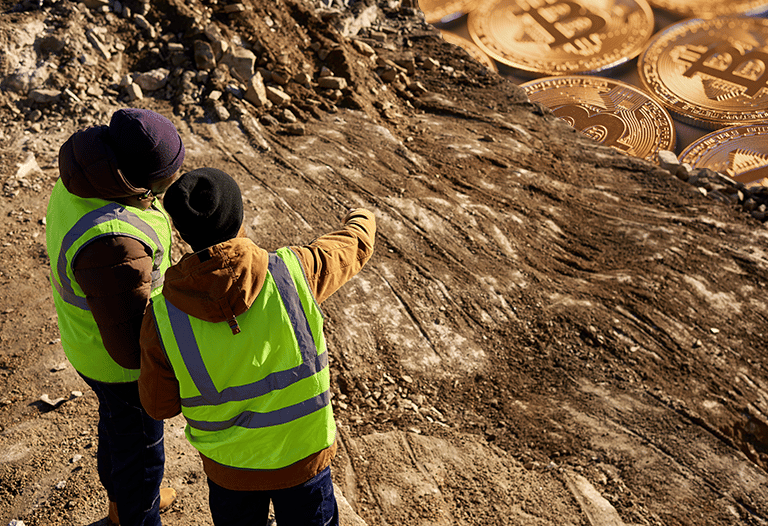
What Is Cryptocurrency Mining? A Complete Guide for Beginners
Cryptocurrency mining is one of the most well-known concepts in the world of Bitcoin and blockchain technology. When people first discover cryptocurrencies, they often hear about miners, mining farms, powerful computers, and the process of creating new coins.
But what exactly is cryptocurrency mining? How does it work? Why is mining important for some blockchain networks? And is mining still profitable today?
Cryptocurrency mining is a technical process that, in certain blockchain networks, helps validate transactions, maintain the network, and add new blocks to the blockchain. In some systems, miners receive rewards for contributing computing power to the network.
Bitcoin is the most famous cryptocurrency that uses mining. However, not every cryptocurrency can be mined. Many modern blockchain networks use other consensus mechanisms, such as Proof of Stake.
In this guide, we will explain what cryptocurrency mining is, how it works, what miners do, how mining rewards are created, what equipment is required, and what advantages and challenges mining involves.
What Is Cryptocurrency Mining?
Cryptocurrency mining is the process of using computing power to participate in the validation and security of certain blockchain networks.
In a Proof of Work blockchain, miners compete to solve a computational problem. The miner that successfully finds a valid solution can propose a new block of transactions to the network.
If the block is accepted according to the protocol’s rules, the miner may receive a reward.
Mining therefore has two important functions.
First, it helps process and secure transactions.
Second, it can be part of the mechanism through which new units of a cryptocurrency are issued.
Bitcoin is the best-known example of a cryptocurrency that uses Proof of Work mining.
Why Does Bitcoin Need Mining?
Bitcoin was designed to operate without relying on a central bank or financial institution to maintain its transaction history.
This creates an important challenge: how can a decentralized network agree on which transactions are valid?
Bitcoin uses Proof of Work mining as part of its solution.
Miners compete to create new blocks and follow the rules of the Bitcoin protocol. This competition makes it difficult for a malicious participant to manipulate the blockchain because controlling the network would require enormous amounts of computational resources.
Mining therefore contributes to Bitcoin’s security and decentralization.
How Does Cryptocurrency Mining Work?
The mining process can be divided into several steps.
First, users broadcast transactions to the network.
These transactions are collected and checked by network participants.
Miners select valid transactions and organize them into a candidate block.
The miner then attempts to find a valid solution to the Proof of Work challenge.
This involves repeatedly performing calculations using different values until a result meets the network’s requirements.
The process is not about solving a mathematical equation in the traditional sense. Instead, miners perform a large number of hash calculations and search for a result that satisfies the protocol’s difficulty requirements.
When a miner finds a valid solution, the proposed block is broadcast to the network.
Other participants verify the block.
If everything is valid, the block can be added to the blockchain.
What Is Proof of Work?
Proof of Work, commonly abbreviated as PoW, is a consensus mechanism used by Bitcoin and several other blockchain networks.
The basic idea is that miners must demonstrate that they have performed a significant amount of computational work.
This work requires electricity and specialized hardware.
The difficulty of the mining process is adjusted by the network so that blocks are produced at approximately the intended rate.
In Bitcoin, for example, the network adjusts mining difficulty periodically to account for changes in the total computing power participating in the network.
If more miners join and the total computing power increases, the difficulty can increase.
If computing power decreases, the difficulty can decrease.
This mechanism helps keep the network operating according to its protocol rules.
What Is a Mining Block?
A block is a collection of information that is added to the blockchain.
In a cryptocurrency such as Bitcoin, a block contains a group of transactions along with other technical information.
One important component is the reference to the previous block.
This helps connect the new block to the existing blockchain.
The block also contains information related to the mining process, including a value that miners can change while searching for a valid hash.
Once a valid block is accepted by the network, it becomes part of the blockchain’s history.
What Is Hashing?
Hashing is fundamental to cryptocurrency mining.
A hash function takes data as input and produces a fixed-length output.
For example, changing even a small part of the input data can produce a completely different hash.
Bitcoin uses the SHA-256 hashing algorithm as part of its Proof of Work system.
Miners repeatedly calculate hashes while changing certain values in the block header.
They are searching for a hash that meets the current difficulty requirement.
Because the process requires enormous numbers of calculations, miners with more computing power have a greater probability of finding the next valid block.
What Equipment Is Used for Mining?
Mining hardware has evolved considerably over time.
In the early days of Bitcoin, it was possible to mine using ordinary computer processors.
As more people began mining, competition increased and miners started using more powerful hardware.
Graphics Processing Units, or GPUs, became popular for mining certain cryptocurrencies because they can perform large numbers of calculations efficiently.
Bitcoin mining eventually moved toward specialized hardware known as ASICs, or Application-Specific Integrated Circuits.
ASIC miners are specifically designed to perform the calculations required by particular Proof of Work algorithms.
They can be significantly more efficient than general-purpose computers for the algorithms they support.
What Is a Mining Farm?
A mining farm is a location where multiple mining machines operate together.
Mining farms can range from relatively small operations to large industrial facilities containing thousands of specialized machines.
Because mining hardware consumes electricity and produces heat, mining facilities need appropriate infrastructure.
Important considerations include electricity costs, cooling systems, network connectivity, hardware maintenance, and physical security.
For large-scale mining operations, electricity prices can have a major impact on profitability.
What Are Mining Pools?
Mining on a large blockchain such as Bitcoin can be extremely competitive.
An individual miner with relatively little computing power may have a very small probability of finding a block independently.
To address this, miners can join mining pools.
A mining pool combines the computing power of many miners.
When the pool successfully finds a block, the reward is distributed among participating miners according to the pool’s rules and their contribution.
Mining pools can provide miners with more regular but smaller payouts compared with attempting to mine independently.
What Is the Bitcoin Mining Reward?
Bitcoin mining rewards have two main components: the block subsidy and transaction fees.
The block subsidy consists of newly created bitcoin awarded according to the Bitcoin protocol.
However, the amount of new bitcoin issued through mining is not fixed forever.
Bitcoin has a programmed issuance schedule, and the block subsidy is periodically reduced through events known as halvings.
The reduction in new issuance is an important characteristic of Bitcoin’s monetary system.
As the block subsidy becomes smaller over time, transaction fees are expected to become an increasingly important part of miners’ revenue.
What Is Bitcoin Halving?
A Bitcoin halving is an event in which the block subsidy paid to miners is reduced by half.
Halvings occur after a certain number of blocks have been mined.
The purpose is to gradually reduce the rate at which new bitcoin enters circulation.
Bitcoin’s maximum supply is designed to be approximately 21 million BTC.
The halving mechanism contributes to Bitcoin’s predetermined issuance schedule.
It is important to understand that a halving does not automatically mean that Bitcoin’s price will rise. Market prices depend on many factors, including supply, demand, economic conditions, investor sentiment, and regulation.
Is Cryptocurrency Mining Profitable?
Mining profitability depends on many variables.
Some of the most important include:
- Electricity costs
- Mining hardware efficiency
- Cryptocurrency price
- Network difficulty
- Mining pool fees
- Block rewards
- Transaction fees
- Hardware maintenance
- Cooling costs
A miner can generate cryptocurrency but still lose money if the cost of electricity and equipment is higher than the value of the rewards received.
This is why professional mining operations carefully calculate their costs before purchasing hardware.
Mining profitability can also change rapidly because cryptocurrency prices and network difficulty fluctuate.
Energy Consumption and Environmental Concerns
One of the biggest criticisms of Proof of Work mining is its energy consumption.
Mining operations require electricity to run large numbers of computers continuously.
The environmental impact depends on factors such as the amount of energy consumed, the efficiency of the hardware, and the sources used to generate electricity.
Some mining operations use renewable energy or locate their facilities in regions where electricity is relatively inexpensive.
Nevertheless, the energy consumption of Proof of Work networks remains an important topic of discussion.
Supporters argue that the energy expenditure contributes to network security and that miners can increasingly use otherwise wasted or stranded energy.
Critics argue that the environmental cost may be too high compared with the benefits provided by the system.
Can All Cryptocurrencies Be Mined?
No.
This is an important distinction.
Only cryptocurrencies that use a mining-based consensus mechanism, such as Proof of Work, can generally be mined in the traditional sense.
Bitcoin is the most prominent example.
Other cryptocurrencies use different systems.
For example, many Proof of Stake networks rely on validators rather than miners.
Instead of competing with computing power, validators participate by staking cryptocurrency and following the network’s consensus rules.
Therefore, if you want to mine a particular cryptocurrency, you first need to understand which consensus mechanism its blockchain uses.
Mining vs. Staking
Mining and staking are two different approaches to blockchain consensus.
Mining generally involves computational work and specialized hardware. It is associated primarily with Proof of Work networks.
Staking involves committing cryptocurrency to participate in a Proof of Stake network.
Both systems aim to help secure and operate blockchain networks, but they use different economic and technical mechanisms.
Mining can require significant investment in hardware and electricity, while staking generally requires holding and locking or delegating cryptocurrency according to the rules of the specific network.
Neither method is completely risk-free.
Risks of Cryptocurrency Mining
Cryptocurrency mining involves several risks.
The first is financial risk. Mining equipment can be expensive, and its value can decrease as newer and more efficient hardware becomes available.
Electricity costs can also increase.
Another risk is cryptocurrency price volatility. If the price of the mined asset falls significantly, mining revenue may no longer cover operating expenses.
There are also technical risks, including hardware failures, overheating, network problems, and maintenance costs.
Finally, mining regulations can vary between countries and may change over time.
Anyone considering mining should carefully evaluate the technical, financial, and legal aspects before investing in equipment.
The Future of Cryptocurrency Mining
The future of mining will depend on technological development, cryptocurrency economics, energy markets, and regulation.
Mining hardware is likely to continue becoming more efficient.
At the same time, miners may increasingly look for inexpensive and renewable energy sources.
Bitcoin mining will probably remain an important part of the cryptocurrency ecosystem because Proof of Work is deeply integrated into the design of the Bitcoin network.
However, other blockchain projects may continue choosing Proof of Stake and alternative consensus mechanisms.
This means that mining will remain relevant, but it will not necessarily be the foundation of every blockchain network.
Conclusion
Cryptocurrency mining is a process used by Proof of Work blockchain networks to help validate transactions, create new blocks, secure the network, and issue new cryptocurrency according to predetermined rules.
Bitcoin is the most famous example of a cryptocurrency that relies on mining.
Miners use specialized hardware to perform enormous numbers of calculations in an attempt to find a valid hash. When a miner successfully creates an accepted block, they can receive a combination of newly issued cryptocurrency and transaction fees.
However, mining is not simply a way to generate free cryptocurrency. It requires hardware, electricity, technical knowledge, and careful financial planning.
Profitability depends on many factors, including electricity prices, hardware efficiency, network difficulty, cryptocurrency prices, and mining rewards.
For beginners, understanding how mining works is essential for understanding why Proof of Work cryptocurrencies such as Bitcoin are able to operate without a central authority.
Mining is more than a method of creating new coins. It is a fundamental part of the security and consensus system behind Proof of Work blockchains, helping transform computing power and economic incentives into a decentralized network capable of maintaining a shared transaction history.
