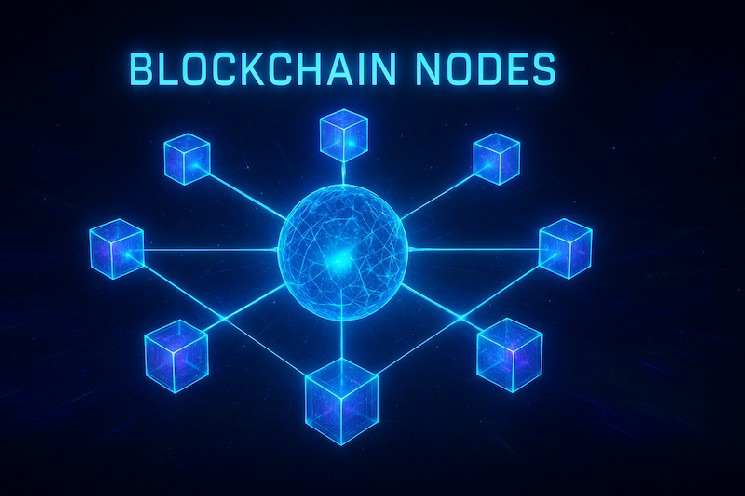
What Are Blockchain Nodes? A Complete Guide for Beginners
Blockchain nodes are one of the most important but often misunderstood components of cryptocurrency networks. When people first learn about Bitcoin, Ethereum, and other blockchain systems, they usually hear about wallets, transactions, miners, validators, and cryptocurrencies. However, behind all of these elements are computers known as nodes.
Nodes help blockchain networks operate without relying on a single central server or administrator. They can store blockchain data, verify transactions, validate blocks, communicate with other participants, and, depending on the type of node and blockchain, participate in the network’s consensus process.
Without nodes, a decentralized blockchain would not function in the way it was designed to.
But what exactly is a node? How does it work? What is the difference between a full node and a light node? Are miners and validators nodes? Why would someone want to operate a node?
In this guide, we will explain what blockchain nodes are, what they do, how they communicate, the different types of nodes, their importance for decentralization and security, and why nodes are essential to cryptocurrency networks.
What Is a Blockchain Node?
A blockchain node is a computer or other device that participates in a blockchain network by running the software associated with that network.
The exact responsibilities of a node depend on the blockchain and the type of node.
Some nodes maintain a complete copy of the blockchain.
Others store only part of the information.
Some nodes specialize in verifying transactions.
Other participants, such as miners or validators, may perform additional functions related to block production and consensus.
The most important idea is that nodes help maintain and verify the shared state of a decentralized network.
Instead of having one central computer responsible for maintaining the blockchain, information can be distributed among many independent computers.
Why Are Nodes Necessary?
Imagine a traditional banking system.
A bank maintains a centralized database containing information about accounts and transactions.
Customers generally trust the bank to keep this information accurate.
A decentralized blockchain needs a different solution.
There is no single organization that can automatically decide which transactions are valid.
Instead, network participants use blockchain software to independently check whether transactions and blocks follow the protocol’s rules.
Nodes make this possible.
They provide independent verification and communication throughout the network.
This means that the blockchain does not have to depend on one central database controlled by one company.
How Do Blockchain Nodes Work?
A node generally performs several important tasks.
First, it connects to other computers participating in the same blockchain network.
Second, it receives information such as transactions and blocks.
Third, depending on its configuration, it verifies that information according to the blockchain’s rules.
Fourth, it can share valid information with other nodes.
For example, suppose a user creates a Bitcoin transaction.
The transaction can be broadcast to the network.
Nodes receive the transaction and check whether it is valid.
If it meets the protocol’s requirements, nodes can relay it to other participants.
Eventually, a miner can include the transaction in a block.
Nodes then verify the new block.
This continuous exchange of information helps the network maintain a consistent blockchain.
Nodes and the Blockchain Ledger
One of the most important characteristics of many public blockchains is that multiple participants maintain copies of the ledger.
A full node on a blockchain such as Bitcoin can maintain a complete copy of the blockchain’s historical data.
This allows the node to independently verify transactions and blocks.
If someone proposes an invalid transaction, a properly operating node can reject it.
This is important because blockchain security does not depend only on the computers that produce blocks.
Independent nodes also play a crucial role in determining whether those blocks follow the rules.
What Does a Node Verify?
The exact rules vary between blockchains, but nodes can verify many different things.
For a cryptocurrency such as Bitcoin, a node can check whether:
- Transactions follow the protocol rules
- Digital signatures are valid
- Inputs are properly authorized
- Funds are not being spent in an invalid way
- Blocks have the correct structure
- Block rewards follow the rules
- Consensus requirements have been satisfied
- The blockchain follows the correct protocol
If a transaction or block violates the rules, nodes can reject it.
This independent verification is a fundamental part of decentralized blockchain systems.
Different Types of Blockchain Nodes
Not every node performs exactly the same functions.
There are several types of nodes, and terminology can differ between blockchain projects.
Full Nodes
A full node downloads and independently verifies blockchain data according to the network’s protocol.
In Bitcoin, a full node can maintain the blockchain’s history and validate blocks and transactions without relying on another participant to determine whether they are valid.
Full nodes are extremely important for network security.
They provide independent verification.
If a block producer attempts to create an invalid block, full nodes can reject it.
This means miners cannot simply change the rules of Bitcoin by themselves.
Lightweight or SPV Nodes
Lightweight nodes do not necessarily store the entire blockchain.
Instead, they can use simplified verification methods to interact with the network while requiring fewer storage and computational resources.
Bitcoin’s Simplified Payment Verification, or SPV, is an example of an approach designed for lightweight clients.
These systems can be useful for mobile devices and computers with limited resources.
However, lightweight clients generally provide a different level of independent verification than full nodes.
Archive Nodes
Some blockchain networks use the concept of archive nodes.
An archive node can store extensive historical blockchain state beyond what is necessary for ordinary full-node operation.
These nodes can require substantial storage resources.
They are particularly useful for blockchain applications and developers that need access to historical state information.
The exact definition of an archive node depends on the blockchain.
Mining Nodes
In Proof of Work networks such as Bitcoin, miners participate in the process of creating blocks.
A mining operation can run node software and use specialized mining hardware to perform Proof of Work.
It is useful to distinguish between the roles.
A node validates blockchain rules.
A miner performs the computational work required by Proof of Work to compete for block production.
A mining operation may perform both functions, but mining and running a node are not identical activities.
Validator Nodes
Proof of Stake networks use validators rather than Proof of Work miners.
Validators participate in the consensus process according to the rules of the specific blockchain.
They may propose blocks, attest to blocks, or perform other consensus-related functions.
A validator generally operates software that includes or interacts with node functionality.
However, the precise architecture differs between blockchain networks.
Nodes and Decentralization
Nodes are directly connected to the concept of decentralization.
A blockchain with many independently operated nodes can distribute verification across numerous participants.
This can make the network less dependent on a single organization.
Suppose one node shuts down.
The rest of the network can continue operating.
If a group of nodes behaves maliciously, honest nodes can reject information that violates the protocol.
The more diverse and independent the network’s participants are, the more difficult it can be for one entity to control the entire verification process.
However, node count alone does not determine decentralization.
Geographic distribution, ownership, software diversity, infrastructure providers, governance, and other factors also matter.
Can Anyone Run a Node?
For many public blockchains, anyone can download the relevant software and attempt to operate a node.
However, the technical requirements vary significantly.
A user may need:
- A computer or server
- Sufficient storage
- Internet connectivity
- Processing power
- Memory
- Time for the blockchain to synchronize
- Electricity
The requirements depend on the specific network.
Running a Bitcoin full node, for example, is different from running a node for a blockchain with substantially different storage or computational requirements.
How Does a Node Connect to Other Nodes?
Blockchain nodes communicate through peer-to-peer networks.
Instead of relying on one central server, nodes connect with other nodes.
When a node receives valid information, it can relay that information to its peers.
This creates a network through which transactions and blocks can spread.
For example:
A user broadcasts a transaction.
A nearby node receives it.
That node verifies the transaction.
If valid, it can transmit the transaction to other connected nodes.
Those nodes perform their own verification and continue relaying it.
Eventually, the transaction can reach miners or validators.
This process is commonly referred to as transaction propagation.
The Peer-to-Peer Network
The peer-to-peer architecture is important because it removes the need for a central communication server.
Nodes can communicate directly with one another.
This makes blockchain networks more resilient.
There is no single communication point that must remain online for the entire network to function.
However, the network still depends on internet infrastructure and other technologies outside the blockchain itself.
Nodes and Consensus
Nodes play an important role in blockchain consensus.
Consensus is the process through which participants agree on the valid state of the blockchain.
In Bitcoin, Proof of Work determines how blocks are produced.
Miners compete to find valid Proof of Work solutions.
However, full nodes independently verify whether those blocks follow Bitcoin’s rules.
This distinction is important.
Miners can propose blocks, but they do not have unlimited authority to change the protocol.
Nodes enforce the rules they are configured to follow.
In Proof of Stake networks, validators participate directly in consensus.
Other nodes can still perform verification according to the blockchain’s architecture.
Nodes and Blockchain Security
Nodes contribute to blockchain security by independently verifying information.
Imagine a malicious participant attempts to create a transaction that spends more cryptocurrency than the user controls.
A properly operating node can detect that the transaction violates the rules and reject it.
Similarly, if a block contains invalid information, nodes can refuse to accept it as part of the valid chain.
This creates a system in which participants do not have to blindly trust block producers.
They can verify the information themselves.
Why Running Your Own Node Matters
Using your own node can provide stronger independence than relying entirely on someone else’s infrastructure.
For example, a Bitcoin user who operates their own full node can independently verify blockchain information.
They do not have to rely entirely on a third-party server to tell them whether a transaction is valid.
This is particularly important for users who prioritize self-verification and decentralization.
Nodes and Wallets
A cryptocurrency wallet and a blockchain node are not the same thing.
A wallet manages the credentials needed to authorize transactions and allows users to interact with their assets.
A node participates in the blockchain network and verifies or relays blockchain data according to its function.
A wallet can connect to a node.
That node can provide information about transactions and blockchain activity.
Some wallets use their own infrastructure, while others connect to third-party nodes or services.
This distinction is important because users may interact with a blockchain without personally operating a node.
What Happens When a Node Receives a Transaction?
Let’s follow a simplified example.
Imagine Alice wants to send Bitcoin to Bob.
Alice creates a transaction using her wallet.
The transaction is cryptographically authorized and broadcast to the network.
A node receives the transaction.
The node checks the transaction according to Bitcoin’s rules.
If the transaction is invalid, the node can reject it.
If it is valid, the node can relay it to other peers.
The transaction eventually reaches miners.
A miner selects the transaction and includes it in a candidate block.
After the miner successfully completes the required Proof of Work, the block is broadcast.
Nodes receive the block.
They verify it.
If the block is valid, they accept it and update their view of the blockchain.
As more blocks are added, the transaction becomes increasingly established in the blockchain’s history.
What Happens If Nodes Disagree?
In a decentralized network, temporary disagreements can occur.
For example, two valid blocks might be produced close together.
Different nodes may temporarily see different versions of the blockchain.
Consensus rules provide a mechanism for resolving these situations.
In Bitcoin, Proof of Work plays an important role in determining which chain becomes the accepted chain according to the protocol.
Eventually, the network converges on a common history.
This demonstrates why consensus and node validation work together.
Nodes and Forks
A fork occurs when blockchain participants follow different versions of the protocol or temporarily disagree about the blockchain’s history.
There are different types of forks.
A temporary chain split can occur naturally when blocks are produced close together.
A more permanent fork can happen when participants adopt incompatible protocol rules.
Nodes play an important role because they determine which blocks and transactions they consider valid according to the software and rules they are running.
Are Nodes Rewarded?
Running a standard full node does not necessarily provide a direct financial reward.
This is an important distinction between nodes and miners or validators.
Miners can receive block rewards and transaction fees for successfully producing blocks.
Validators on Proof of Stake networks may receive staking rewards.
A standard Bitcoin full node, however, primarily provides verification and networking functions.
People may operate nodes because they value privacy, independence, security, decentralization, or supporting the network.
Benefits of Running a Node
Operating a node can provide several advantages.
Independent Verification
Users can verify blockchain information without relying entirely on third parties.
Greater Privacy
Depending on the configuration, connecting a wallet to your own node can reduce the amount of wallet activity exposed to third-party infrastructure providers.
Network Support
Running a node contributes to the infrastructure of the decentralized network.
Greater Control
Users have more control over the information their software accepts and verifies.
Education
Operating a node can also be an excellent way to learn how blockchain networks work technically.
Challenges of Running a Node
Running a node is not completely effortless.
A full node may require significant storage space.
It can also require bandwidth and electricity.
Initial synchronization may take time.
Users also need to keep the software updated and maintain the underlying computer or server.
For advanced users, these requirements are manageable.
For beginners, however, they can represent a learning curve.
Are More Nodes Always Better?
A larger number of nodes can contribute to decentralization, but node quantity is not the only factor.
The independence of those nodes matters.
For example, if thousands of nodes are operated by a small number of organizations using the same infrastructure provider, the network may have more concentration than the raw node count suggests.
A healthy blockchain ecosystem therefore benefits from diversity.
This includes:
- Independent operators
- Geographic distribution
- Different infrastructure providers
- Different implementations where appropriate
- Open participation
- Diverse economic participants
Decentralization is a broader concept than simply counting computers.
Nodes in Bitcoin
Bitcoin is one of the clearest examples of the importance of nodes.
Bitcoin full nodes independently verify transactions and blocks according to the Bitcoin protocol.
Miners produce Proof of Work blocks, but full nodes determine whether those blocks comply with the rules they enforce.
This separation of roles helps maintain Bitcoin’s decentralized structure.
Users can choose to operate their own nodes rather than relying completely on third-party infrastructure.
Nodes in Other Cryptocurrencies
Other blockchain networks use different node architectures.
Proof of Stake networks generally rely on validators to participate in consensus.
Smart-contract platforms may require nodes to maintain additional state and support decentralized applications.
Some networks have specialized node types designed for particular purposes.
The terminology can therefore vary.
When researching a cryptocurrency, it is useful to examine the specific network’s documentation rather than assuming that every blockchain uses nodes in exactly the same way.
Why Nodes Matter for the Future of Blockchain
As blockchain technology develops, nodes will continue to play an important role.
Future networks will need to balance several competing goals:
- Decentralization
- Security
- Scalability
- Privacy
- Accessibility
- Efficiency
Making nodes easier and cheaper to operate can potentially increase participation.
At the same time, blockchain networks need to avoid designs that place excessive demands on ordinary users.
This is one of the fundamental challenges of blockchain development.
A network that requires extremely expensive hardware to verify the chain may become less accessible to ordinary participants.
Conclusion
Blockchain nodes are the computers that participate in maintaining, verifying, and communicating information across decentralized blockchain networks.
They can perform different functions depending on the network and their configuration.
Full nodes can independently verify blockchain data, lightweight nodes can interact with networks using fewer resources, miners participate in Proof of Work block production, and validators participate in consensus on Proof of Stake networks.
Nodes are important because they help prevent blockchain networks from depending entirely on a central authority.
They verify transactions, validate blocks, communicate with other participants, and help enforce the rules of the protocol.
One of the most important concepts to understand is that block producers do not necessarily have the final authority over the blockchain’s rules. In networks such as Bitcoin, independent nodes verify whether blocks and transactions follow the protocol.
Running a node can therefore provide users with greater independence, verification capabilities, privacy benefits, and a deeper understanding of blockchain technology.
As cryptocurrencies and decentralized applications continue to evolve, nodes will remain a fundamental part of the infrastructure that makes blockchain networks possible.
Without a distributed network of participants capable of communicating and verifying information, the concept of a decentralized blockchain would be fundamentally different. Nodes are therefore one of the essential building blocks behind Bitcoin and the wider cryptocurrency ecosystem.
