What Are Smart Contracts? A Complete Guide for Beginners
Smart contracts are one of the most important technologies to emerge from the blockchain industry. They have expanded the possibilities of blockchain networks far beyond simply sending and receiving cryptocurrencies.
When people first discover blockchain technology, they often associate it with digital currencies such as Bitcoin. However, blockchain networks can also support software programs capable of automatically executing predefined instructions.
These programs are commonly known as smart contracts.
Smart contracts can allow users to exchange digital assets, access decentralized applications, create tokens, participate in decentralized finance, and perform other activities without relying entirely on a traditional intermediary.
The concept may sound complicated at first, but the basic idea is relatively simple.
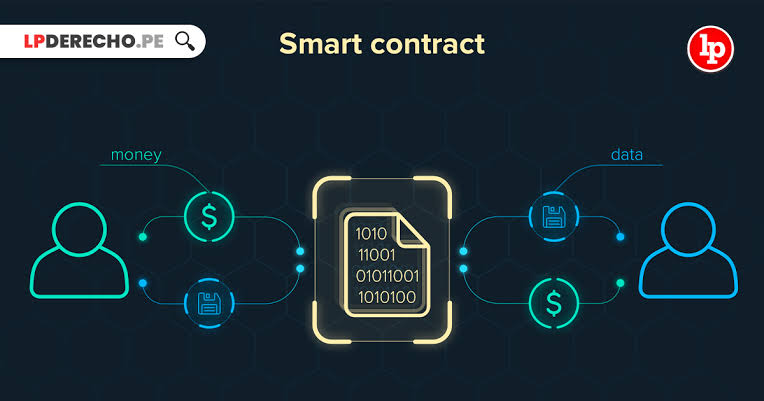
A smart contract is a program stored on a blockchain that executes according to predefined rules. When the conditions required by the program are met, the blockchain processes the corresponding instructions.
In this guide, we will explain what smart contracts are, how they work, their main characteristics, their advantages and risks, common use cases, and why they are important for the future of blockchain technology.
What Is a Smart Contract?
A smart contract is a computer program designed to automatically execute specific actions when predetermined conditions are satisfied.
The program is deployed on a blockchain network.
Once deployed, the smart contract can interact with users and other blockchain applications according to the rules written in its code.
A simple example can help explain the concept.
Imagine a digital agreement that says:
“If Alice sends 1 cryptocurrency unit to this address, automatically send a digital asset to Alice.”
The smart contract can be programmed to perform this action without requiring an employee, bank, or other intermediary to manually process the transaction.
The blockchain provides the environment where the program operates, while the smart contract defines the rules.
The term “smart contract” can sometimes be misleading because not every smart contract is a legal contract.
In most cases, it is simply computer code that executes predefined instructions.
How Do Smart Contracts Work?
Smart contracts generally follow a sequence of steps.
First, developers write the contract’s code.
Second, the code is deployed to a compatible blockchain.
Third, users interact with the contract by sending transactions.
Fourth, the blockchain network processes the transaction according to the contract’s rules.
Finally, the contract executes the programmed action if the required conditions are satisfied.
Once deployed, a smart contract can operate without requiring a central administrator to manually execute every instruction.
The exact process depends on the blockchain being used.
Smart Contracts and Blockchain
Smart contracts depend heavily on blockchain technology.
A blockchain provides a decentralized environment where transactions and program states can be recorded and verified.
When a user interacts with a smart contract, the transaction is broadcast to the network.
Blockchain participants process the transaction according to the network’s rules.
If the transaction is valid and the user provides the required resources, the smart contract executes.
The resulting changes are then recorded as part of the blockchain’s state.
This allows multiple participants to independently verify the outcome.
What Information Does a Smart Contract Contain?
A smart contract contains computer code and information about its state.
The code defines what the contract can do.
For example, a token contract may contain functions for transferring tokens, checking balances, or approving another address to spend tokens.
A decentralized finance contract might contain functions for depositing assets, borrowing funds, or calculating interest according to predetermined rules.
The complexity of smart contracts can range from very simple programs to sophisticated applications containing thousands of lines of code.
Because smart contracts can control valuable digital assets, the quality and security of their code are extremely important.
Smart Contracts and Ethereum
Ethereum played a major role in making smart contracts popular.
While Bitcoin introduced a decentralized digital currency and programmable transaction capabilities, Ethereum was designed as a general-purpose blockchain capable of supporting more complex programs.
Ethereum allows developers to deploy smart contracts that run on its network.
These contracts can interact with one another, creating decentralized applications and financial systems.
Ethereum’s smart-contract capabilities helped create a large ecosystem of decentralized applications, tokens, decentralized exchanges, lending protocols, games, and other blockchain-based services.
Other blockchain networks also support smart contracts, including several platforms designed specifically for decentralized applications.
Smart Contracts and Programming Languages
Smart contracts are written using programming languages supported by their respective blockchain platforms.
For example, Ethereum smart contracts are commonly written in Solidity.
Solidity is a programming language designed for creating programs that run on Ethereum and compatible blockchain environments.
Developers must understand both programming and blockchain concepts when creating smart contracts.
A programming error can have serious consequences.
Unlike a traditional web application, where developers may be able to modify a database or reverse an operation, blockchain transactions can be difficult or impossible to reverse.
This makes smart-contract security particularly important.
What Are Smart Contracts Used For?
Smart contracts have many potential applications.
They can be used whenever predefined rules need to be executed automatically within a blockchain environment.
Some major examples include:
- Decentralized finance
- Token creation
- Decentralized exchanges
- NFTs
- Blockchain games
- DAOs
- Digital asset management
- Crowdfunding
- Automated payments
Let’s examine some of these applications in more detail.
Decentralized Finance
Decentralized finance, commonly known as DeFi, is one of the largest areas of smart-contract adoption.
DeFi applications allow users to access financial services through blockchain-based protocols.
Smart contracts can automate activities such as:
- Lending
- Borrowing
- Trading
- Liquidity provision
- Asset exchanges
- Interest calculations
Instead of relying entirely on a bank or financial company, users interact directly with blockchain-based protocols.
This can potentially reduce the need for traditional intermediaries.
However, DeFi also introduces significant technical and financial risks.
Decentralized Exchanges
A decentralized exchange, or DEX, allows users to trade digital assets using blockchain-based smart contracts.
Instead of depositing assets into a centralized exchange’s custody system, users can interact directly with the exchange protocol.
Smart contracts can manage trading logic and liquidity.
Automated market makers are one example of a smart-contract-based trading system.
These protocols use mathematical formulas and liquidity pools rather than traditional order books in many cases.
Token Creation
Smart contracts make it possible to create digital tokens on compatible blockchain networks.
A token contract can define important characteristics such as:
- Total supply
- Balances
- Transfer rules
- Permissions
- Minting functions
- Burning functions
This has allowed developers to create thousands of digital assets without needing to build an entirely new blockchain for each one.
NFTs
Non-fungible tokens, or NFTs, are another important application.
Unlike cryptocurrencies where individual units are generally interchangeable, NFTs can represent unique digital assets or identifiers.
Smart contracts can define how NFTs are created, transferred, and managed.
NFTs have been used for digital art, collectibles, gaming assets, memberships, tickets, and other applications.
The underlying technology does not guarantee that an NFT will have financial value.
The value depends on factors such as demand, utility, scarcity, ownership rights, and market conditions.
DAOs and Smart Contracts
A DAO, or Decentralized Autonomous Organization, is an organization or coordination system that uses blockchain technology and smart contracts to implement rules and manage activities.
Smart contracts can be used to define voting mechanisms, treasury operations, membership systems, or other organizational functions.
For example, token holders might vote on a proposal.
The smart contract can record the vote and, depending on its design, execute an approved action.
DAOs demonstrate how smart contracts can extend beyond financial transactions into organizational coordination.
However, DAOs can still involve human decision-making.
The term “autonomous” does not mean that every decision is made entirely without people.
Advantages of Smart Contracts
1. Automation
Smart contracts can execute predefined actions automatically.
Once the conditions are satisfied, the programmed instructions can be processed by the blockchain.
This can reduce the need for manual intervention.
2. Transparency
On many public blockchains, smart-contract code and transaction activity can be publicly inspected.
Users can potentially examine how a contract operates before interacting with it.
This level of transparency can be useful for auditing and verification.
However, public visibility does not guarantee that the code is safe.
3. Reduced Dependence on Intermediaries
Smart contracts can automate functions traditionally performed by intermediaries.
For example, a decentralized exchange can use smart contracts to facilitate asset trading without requiring a conventional centralized exchange to custody every user’s assets.
This can potentially reduce certain costs and points of centralized control.
4. Speed
Traditional agreements can require manual processing.
A smart contract can execute automatically when its conditions are satisfied.
Blockchain processing can therefore make certain digital operations faster.
The actual speed depends on the blockchain’s capacity, network congestion, and the complexity of the transaction.
5. Global Accessibility
Public blockchain applications can potentially be accessed by users around the world.
A user generally needs compatible software and access to the relevant blockchain network.
This can make smart-contract-based applications globally accessible.
However, local regulations, internet access, and service availability can create practical limitations.
6. Programmability
One of the greatest advantages of smart contracts is programmability.
Developers can create complex rules and interactions.
Multiple smart contracts can also interact with one another.
This makes it possible to build entire ecosystems of decentralized applications.
Risks and Limitations of Smart Contracts
Smart contracts are powerful, but they are not risk-free.
1. Programming Errors
A bug in smart-contract code can create serious vulnerabilities.
If a contract controls valuable assets, an attacker may attempt to exploit a programming error.
Because blockchain transactions can be difficult to reverse, the consequences can be severe.
Professional auditing and extensive testing are therefore important.
2. Irreversible Transactions
Blockchain transactions are generally designed to be difficult to reverse.
If a user interacts with a smart contract incorrectly, recovering the funds may not be possible.
This creates additional responsibility for users.
3. Oracle Problems
Smart contracts cannot automatically know everything happening in the outside world.
They often need external data sources called oracles.
For example, a smart contract may need to know the current price of an asset.
An oracle can provide this information.
However, if the external data is inaccurate or manipulated, the smart contract may execute an incorrect action.
This is known as the oracle problem.
4. Gas Fees
Many smart-contract blockchain networks require users to pay transaction fees.
On Ethereum, these fees are commonly referred to as gas fees.
The cost depends on network conditions and the computational resources required by the transaction.
During periods of high demand, fees can become expensive.
5. Complexity
Smart contracts can be difficult for ordinary users to understand.
A user may interact with a contract without fully understanding what the transaction will do.
This creates risks, particularly when contracts have complex permissions or financial functions.
6. Fraudulent Contracts
Not every smart contract is legitimate.
Developers can create malicious contracts designed to steal assets or exploit users.
The fact that a contract exists on a blockchain does not mean that it is trustworthy.
Users should carefully research projects before interacting with their contracts.
Are Smart Contracts Really “Smart”?
The word “smart” does not mean that a smart contract is intelligent.
A smart contract does not think, reason, or make independent decisions like a human.
It follows programmed instructions.
If the conditions defined in the code are satisfied, the contract performs the corresponding actions.
This predictability is actually one of its main characteristics.
The contract does not need to understand the real-world meaning of an agreement.
It simply executes code.
Smart Contracts vs. Traditional Contracts
Traditional contracts are usually written in legal language.
They define obligations between parties and can be enforced through legal institutions.
Smart contracts are primarily computer programs.
They define rules that can be automatically executed by blockchain infrastructure.
The two concepts can sometimes work together.
For example, a traditional legal agreement might describe an arrangement while a smart contract automates certain digital payments.
However, a smart contract should not automatically be considered a legal contract.
The legal status of blockchain-based agreements depends on the relevant jurisdiction and circumstances.
Can Smart Contracts Be Changed?
This depends on how the contract was designed.
Some smart contracts are deployed with code that cannot easily be changed.
Others use upgrade mechanisms that allow authorized parties to modify certain aspects.
Upgradeable contracts can be useful because developers can fix bugs or introduce improvements.
However, upgradeability also introduces trust considerations.
If a small group of people can change a contract, users may need to trust those administrators.
Therefore, when evaluating a smart contract, it is important to understand not only what the code currently does but also who has the authority to modify it.
Smart Contract Security
Security is one of the most important aspects of smart-contract development.
Developers can use several techniques to reduce risk.
These include:
- Code reviews
- Automated testing
- Formal verification
- Independent security audits
- Bug bounty programs
- Carefully designed permissions
- Limiting unnecessary complexity
However, no security method can guarantee that a smart contract is completely free from vulnerabilities.
Users should therefore consider smart-contract risk whenever they interact with blockchain applications.
The Role of Smart Contracts in Web3
Smart contracts are central to the broader concept of Web3.
Web3 generally refers to a vision of an internet in which users can interact with decentralized applications and maintain greater control over digital assets and identities.
Smart contracts provide much of the programmable infrastructure required for this model.
They can manage tokens, decentralized exchanges, lending systems, digital collectibles, governance systems, and many other applications.
Without smart contracts, many of the financial and organizational applications associated with Web3 would not be possible in their current form.
The Future of Smart Contracts
Smart-contract technology is still developing.
Future improvements may focus on scalability, privacy, security, interoperability, and usability.
Layer 2 networks and other scaling technologies may allow smart-contract applications to process more activity while reducing costs.
Developers are also working on better programming tools, security systems, and development frameworks.
As blockchain infrastructure becomes easier to use, smart contracts could potentially become less visible to ordinary users.
People may eventually use applications powered by smart contracts without needing to understand the underlying technology.
This is similar to how most internet users do not need to understand the technical details of HTTP, databases, or encryption to use websites.
Why Smart Contracts Matter
The importance of smart contracts comes from their ability to combine programmable rules with decentralized infrastructure.
A blockchain provides a shared environment.
Cryptography provides authentication and security mechanisms.
Consensus allows the network to agree on the state of the system.
Smart contracts add programmable logic.
Together, these technologies allow developers to create applications that can operate according to predefined rules without relying entirely on a centralized administrator.
This represents a significant change in how digital agreements and assets can be managed.
Conclusion
Smart contracts are blockchain-based programs that automatically execute predefined instructions when specific conditions are satisfied.
They are one of the most important innovations in the cryptocurrency ecosystem because they transform blockchains from systems primarily designed for transferring digital value into programmable platforms capable of supporting complex applications.
Smart contracts can be used for decentralized finance, token creation, NFTs, decentralized exchanges, DAOs, blockchain games, digital asset management, and many other applications.
They offer several potential advantages, including automation, transparency, programmability, global accessibility, and reduced dependence on traditional intermediaries.
However, they also introduce significant risks.
Programming bugs, malicious contracts, oracle failures, transaction irreversibility, gas fees, and technical complexity can all create problems for users.
The most important thing to remember is that a smart contract is not intelligent and does not necessarily represent a legal agreement. It is software that executes according to its programmed rules.
Smart contracts have become a fundamental building block of modern blockchain technology. By combining programmable code with decentralized networks, they allow digital assets and applications to operate according to predefined rules. As blockchain technology continues to develop, smart contracts are likely to remain at the center of innovation in decentralized finance, digital ownership, Web3, and other emerging applications.
