How to Buy Cryptocurrency: A Complete Beginner’s Guide
How to Buy Cryptocurrency: A Complete Beginner’s Guide
Cryptocurrency has become increasingly accessible to people around the world. Today, buying digital assets can often be done through online platforms, mobile applications, cryptocurrency exchanges, and other financial services.
However, buying cryptocurrency is not simply a matter of choosing a coin and pressing a button. Beginners should understand how cryptocurrency works, how exchanges operate, how to protect their accounts, how transactions are processed, and what risks are involved.
Cryptocurrency markets are also highly volatile. The value of a digital asset can rise or fall significantly in a short period of time. For this reason, learning the basics before making a purchase is an important part of responsible cryptocurrency use.
This guide explains how to buy cryptocurrency step by step, from choosing an exchange and creating an account to selecting a cryptocurrency, making a purchase, storing your assets, and protecting yourself from common risks.
What Do You Need to Buy Cryptocurrency?
Before buying cryptocurrency, you generally need three basic things:
- An internet-connected device
- An account with a cryptocurrency service or exchange
- A payment method or existing cryptocurrency
Depending on the platform and country, available payment methods may include bank transfers, debit cards, credit cards, or other supported payment services.
Requirements vary between platforms and jurisdictions.
Some services may also require identity verification before allowing users to buy or withdraw cryptocurrency.
Step 1: Learn the Basics of Cryptocurrency
Before making your first purchase, it is useful to understand what you are buying.
A cryptocurrency is a digital asset that operates using blockchain technology.
Bitcoin, Ethereum, XRP, Solana, Cardano, and thousands of other cryptocurrencies exist in the market.
However, these assets are not identical.
Some cryptocurrencies are designed primarily as digital money.
Others are connected to blockchain platforms that support smart contracts and decentralized applications.
Some tokens represent specific projects, services, or digital assets.
Understanding the purpose of a cryptocurrency can help you make more informed decisions.
Step 2: Decide Which Cryptocurrency You Want to Buy
There are thousands of cryptocurrencies and tokens.
For beginners, this can make the market confusing.
Instead of choosing an asset simply because it is popular on social media, research the project first.
Consider questions such as:
- What problem does the project attempt to solve?
- What technology does it use?
- Who develops the project?
- How widely is the network used?
- What is the token’s supply?
- How is the cryptocurrency distributed?
- What are its main competitors?
- What risks does it have?
Bitcoin and Ethereum, for example, have very different purposes.
Bitcoin is primarily associated with decentralized digital money and scarcity.
Ethereum is a programmable blockchain designed to support smart contracts and decentralized applications.
Other projects have different objectives.
Step 3: Choose a Cryptocurrency Exchange
A cryptocurrency exchange is a platform that allows users to buy and sell digital assets.
When selecting an exchange, it is important to research the company carefully.
Consider factors such as:
- Security
- Reputation
- Available cryptocurrencies
- Fees
- Payment methods
- Withdrawal options
- Customer support
- Regulatory status
- Availability in your country
Do not choose an exchange solely because it offers the lowest fees.
Security and reliability are equally important.
The cryptocurrency industry has experienced exchange failures, hacks, scams, and operational problems.
Users should therefore research a platform before depositing funds.
Step 4: Create an Account
After choosing an exchange, the next step is usually creating an account.
You may need to provide:
- An email address
- A password
- Personal information
- Identification documents
Many cryptocurrency services use identity verification procedures commonly known as Know Your Customer, or KYC.
The exact requirements depend on the platform and jurisdiction.
Use accurate information and follow the exchange’s verification process.
Never create accounts through links received from suspicious emails or social-media messages.
Instead, access the platform through its official website or application.
Step 5: Secure Your Account
Security should be a priority before depositing money.
Create a strong, unique password that you do not use for other services.
Where available, enable two-factor authentication, commonly known as 2FA.
Two-factor authentication adds another security layer by requiring an additional verification method when logging in or performing certain actions.
Authenticator applications are often preferable to relying exclusively on SMS, although the security options available depend on the service.
You should also be careful with phishing attempts.
Scammers may create fake websites that look almost identical to legitimate cryptocurrency platforms.
Always verify the website or application before entering your login information.
Step 6: Deposit Money
Once your account has been verified and secured, you can usually deposit funds.
The available options depend on your exchange and location.
A bank transfer may be available in some countries.
Debit or credit card purchases may also be supported.
Each payment method can have different fees and processing times.
Before confirming a deposit, check the costs and instructions provided by the platform.
Start with an amount that you can afford to lose.
There is no guarantee that cryptocurrency prices will increase.
Step 7: Find the Cryptocurrency You Want to Buy
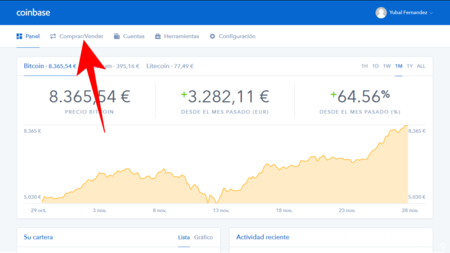
After funding your account, navigate to the trading or purchase section.
You may see a list of cryptocurrencies such as:
- Bitcoin
- Ethereum
- XRP
- Solana
- Cardano
- Stablecoins
- Other digital assets
Select the cryptocurrency you have researched.
Make sure you are purchasing the correct asset.
Some cryptocurrency names and symbols can be confusing, and fraudulent tokens can sometimes use names similar to established projects.
Step 8: Choose the Type of Order
Cryptocurrency exchanges generally provide different types of orders.
The simplest is a market order.
A market order attempts to execute the purchase at the best available price in the market.
The final price can vary slightly depending on liquidity and market conditions.
Another type is a limit order.
With a limit order, you specify the maximum price you are willing to pay.
The order will only execute if the market reaches the specified price and sufficient liquidity is available.
Beginners should understand the difference before using advanced order types.
Step 9: Decide How Much to Buy
You do not need to purchase an entire cryptocurrency.
Many digital assets can be purchased in fractions.
For example, you do not need to buy one complete Bitcoin.
You can purchase a smaller amount.
This makes cryptocurrencies accessible to people with different budgets.
However, accessibility does not mean low risk.
The amount you purchase should be consistent with your financial situation and risk tolerance.
Never borrow money simply to buy cryptocurrency.
Step 10: Review the Transaction
Before confirming your purchase, carefully review the transaction.
Check:
- Cryptocurrency
- Amount
- Purchase price
- Fees
- Total cost
- Payment method
If everything is correct, confirm the transaction.
Depending on the exchange and payment method, the cryptocurrency may appear in your account shortly afterward.
Some transactions can take longer depending on the platform and network.
What Happens After You Buy Cryptocurrency?
Once you purchase cryptocurrency through an exchange, the asset will normally appear in your exchange account.
The exchange may hold the cryptocurrency on your behalf.
This is known as custodial storage.
Alternatively, you can withdraw your cryptocurrency to a personal wallet.
This is commonly described as self-custody.
Both approaches have advantages and risks.
What Is a Cryptocurrency Wallet?
A cryptocurrency wallet is a tool that allows you to manage the cryptographic keys associated with your digital assets.
Wallets can be divided into several categories.
Software Wallets
Software wallets are applications that can be installed on computers or mobile devices.
They are convenient for interacting with cryptocurrency networks and decentralized applications.
However, the device and wallet credentials must be properly protected.
Hardware Wallets
Hardware wallets are physical devices designed to keep private keys isolated from ordinary internet-connected environments.
They are often considered for longer-term storage of cryptocurrency.
However, users still need to protect the recovery phrase associated with the wallet.
Exchange Wallets
When you leave cryptocurrency on an exchange, the platform generally controls the underlying private keys.
This can be convenient, but it means you depend on the exchange to safeguard your assets and process withdrawals.
Self-Custody vs. Exchange Storage
One of the most important decisions after buying cryptocurrency is where to store it.
Keeping assets on an exchange is convenient.
You do not have to manage private keys directly.
However, you are relying on the exchange.
With self-custody, you control the wallet and private keys.
This gives you greater direct control but also greater responsibility.
If you lose your recovery phrase or private key, recovering the assets may be impossible.
Self-custody therefore requires careful security practices.
Protecting Your Recovery Phrase
If you use a self-custody wallet, you may receive a recovery phrase.
This phrase can provide access to the wallet.
Treat it like a master key.
Never:
- Share it with anyone
- Store it in a public location
- Send it through social media
- Enter it into suspicious websites
- Take unnecessary screenshots of it
A legitimate support representative should not ask you to reveal your recovery phrase.
If someone asks for your recovery phrase, treat it as a major warning sign.
Cryptocurrency Scams
Cryptocurrency users are frequently targeted by scams.
Common examples include:
- Fake investment platforms
- Phishing websites
- Fake customer-support accounts
- Giveaway scams
- Impersonation scams
- Fake tokens
- Romance scams
- Pump-and-dump schemes
- Malicious wallet links
A common warning sign is a promise of guaranteed or unusually high returns.
There are no legitimate investments that can guarantee cryptocurrency profits.
Be particularly cautious when someone pressures you to send cryptocurrency quickly.
Blockchain transactions are generally irreversible.
Once cryptocurrency is sent to the wrong address, recovering it may be extremely difficult or impossible.
Understanding Cryptocurrency Fees
Buying cryptocurrency can involve several different costs.
These may include:
- Exchange trading fees
- Payment processing fees
- Network transaction fees
- Withdrawal fees
- Spread
- Slippage
Fees vary significantly between services and networks.
For example, buying cryptocurrency with a card may have different costs from using a bank transfer.
Similarly, withdrawing cryptocurrency from an exchange may involve a network or platform fee.
Always check the final amount before confirming a transaction.
Cryptocurrency Prices and Volatility
Cryptocurrency prices can move dramatically.
Bitcoin, Ethereum, and other digital assets can experience large price increases and decreases.
A cryptocurrency that rises significantly today can fall substantially later.
This volatility creates opportunities for traders but also creates significant risks for investors.
New users should avoid assuming that recent price increases will continue indefinitely.
Past performance does not guarantee future results.
Buying Cryptocurrency Regularly
Some people prefer to buy cryptocurrency periodically rather than making a single large purchase.
One commonly discussed approach is dollar-cost averaging, or DCA.
Under this strategy, a person invests a predetermined amount at regular intervals.
For example, someone might purchase a fixed amount once a month.
This approach can reduce the need to predict the perfect entry point.
However, it does not eliminate investment risk.
If the cryptocurrency declines significantly, the investor can still lose money.
Cryptocurrency and Taxes
Buying cryptocurrency can have tax implications.
Tax rules vary depending on the country where you live.
Selling cryptocurrency, exchanging one cryptocurrency for another, using cryptocurrency to purchase goods or services, staking, and other activities may have different tax consequences.
For this reason, keep detailed records of:
- Purchases
- Sales
- Transfers
- Fees
- Dates
- Amounts
- Cryptocurrency prices
If your cryptocurrency activity becomes significant, consider consulting a qualified tax professional who understands the rules applicable to digital assets in your jurisdiction.
Common Mistakes When Buying Cryptocurrency
Beginners often make avoidable mistakes.
Buying Because of Social Media
Popularity does not necessarily indicate quality.
Investing Everything at Once
Concentrating too much money in a highly volatile asset can create substantial financial risk.
Ignoring Fees
Small fees can become significant over many transactions.
Forgetting Security
Poor account security can lead to losses even if the cryptocurrency itself performs well.
Sending Cryptocurrency to the Wrong Network
Some assets can operate across multiple blockchain networks.
Sending an asset using an unsupported network can potentially result in permanent loss.
Always verify the receiving platform’s instructions.
Sharing Private Information
Never share passwords, private keys, or recovery phrases with strangers.
How to Buy Cryptocurrency Safely
A simple checklist can help beginners approach the process more carefully:
- Research the cryptocurrency.
- Choose a reputable exchange.
- Secure your account with a strong password.
- Enable two-factor authentication.
- Deposit only an amount you can afford to lose.
- Check the cryptocurrency and amount before purchasing.
- Review all fees.
- Understand how storage works.
- Protect your private keys and recovery phrase.
- Keep records for security and tax purposes.
Taking these steps does not eliminate risk, but it can reduce avoidable mistakes.
Should Beginners Buy Cryptocurrency?
There is no universal answer.
Cryptocurrency may be interesting for people who understand the technology and are comfortable with the associated risks.
However, cryptocurrency is not appropriate for everyone.
Before buying, consider your financial situation, investment objectives, time horizon, and ability to tolerate losses.
It is also useful to distinguish between learning about cryptocurrency and purchasing it.
You can study blockchain technology, follow cryptocurrency markets, and understand how wallets and exchanges work without immediately investing money.
Conclusion
Buying cryptocurrency has become relatively accessible, but accessibility should not be confused with simplicity or safety.
The process generally involves choosing a cryptocurrency, researching an exchange, creating and securing an account, depositing funds, placing an order, and deciding how to store the assets afterward.
The most important step is not clicking the Buy button.
It is understanding what you are buying and the risks involved.
Cryptocurrency prices can be highly volatile, and there is no guarantee that an asset will increase in value. Security is also essential because cryptocurrency transactions can often be irreversible.
Beginners should research projects carefully, use reputable services, protect their accounts, understand transaction fees, and never share private keys or recovery phrases.
It is also important to avoid pressure from social media, influencers, strangers, or anyone promising guaranteed returns.
Buying cryptocurrency should be approached as a financial decision that involves risk, not as a guaranteed way to make money.
By learning how exchanges, wallets, blockchain networks, and transactions work, beginners can make more informed decisions and navigate the cryptocurrency ecosystem with greater confidence and caution.How to Buy Cryptocurrency: A Complete Beginner’s Guide
Cryptocurrency has become increasingly accessible to people around the world. Today, buying digital assets can often be done through online platforms, mobile applications, cryptocurrency exchanges, and other financial services.
However, buying cryptocurrency is not simply a matter of choosing a coin and pressing a button. Beginners should understand how cryptocurrency works, how exchanges operate, how to protect their accounts, how transactions are processed, and what risks are involved.
Cryptocurrency markets are also highly volatile. The value of a digital asset can rise or fall significantly in a short period of time. For this reason, learning the basics before making a purchase is an important part of responsible cryptocurrency use.
This guide explains how to buy cryptocurrency step by step, from choosing an exchange and creating an account to selecting a cryptocurrency, making a purchase, storing your assets, and protecting yourself from common risks.
What Do You Need to Buy Cryptocurrency?
Before buying cryptocurrency, you generally need three basic things:
- An internet-connected device
- An account with a cryptocurrency service or exchange
- A payment method or existing cryptocurrency
Depending on the platform and country, available payment methods may include bank transfers, debit cards, credit cards, or other supported payment services.
Requirements vary between platforms and jurisdictions.
Some services may also require identity verification before allowing users to buy or withdraw cryptocurrency.
Step 1: Learn the Basics of Cryptocurrency
Before making your first purchase, it is useful to understand what you are buying.
A cryptocurrency is a digital asset that operates using blockchain technology.
Bitcoin, Ethereum, XRP, Solana, Cardano, and thousands of other cryptocurrencies exist in the market.
However, these assets are not identical.
Some cryptocurrencies are designed primarily as digital money.
Others are connected to blockchain platforms that support smart contracts and decentralized applications.
Some tokens represent specific projects, services, or digital assets.
Understanding the purpose of a cryptocurrency can help you make more informed decisions.
Step 2: Decide Which Cryptocurrency You Want to Buy
There are thousands of cryptocurrencies and tokens.
For beginners, this can make the market confusing.
Instead of choosing an asset simply because it is popular on social media, research the project first.
Consider questions such as:
- What problem does the project attempt to solve?
- What technology does it use?
- Who develops the project?
- How widely is the network used?
- What is the token’s supply?
- How is the cryptocurrency distributed?
- What are its main competitors?
- What risks does it have?
Bitcoin and Ethereum, for example, have very different purposes.
Bitcoin is primarily associated with decentralized digital money and scarcity.
Ethereum is a programmable blockchain designed to support smart contracts and decentralized applications.
Other projects have different objectives.
Step 3: Choose a Cryptocurrency Exchange
A cryptocurrency exchange is a platform that allows users to buy and sell digital assets.
When selecting an exchange, it is important to research the company carefully.
Consider factors such as:
- Security
- Reputation
- Available cryptocurrencies
- Fees
- Payment methods
- Withdrawal options
- Customer support
- Regulatory status
- Availability in your country
Do not choose an exchange solely because it offers the lowest fees.
Security and reliability are equally important.
The cryptocurrency industry has experienced exchange failures, hacks, scams, and operational problems.
Users should therefore research a platform before depositing funds.
Step 4: Create an Account
After choosing an exchange, the next step is usually creating an account.
You may need to provide:
- An email address
- A password
- Personal information
- Identification documents
Many cryptocurrency services use identity verification procedures commonly known as Know Your Customer, or KYC.
The exact requirements depend on the platform and jurisdiction.
Use accurate information and follow the exchange’s verification process.
Never create accounts through links received from suspicious emails or social-media messages.
Instead, access the platform through its official website or application.
Step 5: Secure Your Account
Security should be a priority before depositing money.
Create a strong, unique password that you do not use for other services.
Where available, enable two-factor authentication, commonly known as 2FA.
Two-factor authentication adds another security layer by requiring an additional verification method when logging in or performing certain actions.
Authenticator applications are often preferable to relying exclusively on SMS, although the security options available depend on the service.
You should also be careful with phishing attempts.
Scammers may create fake websites that look almost identical to legitimate cryptocurrency platforms.
Always verify the website or application before entering your login information.
Step 6: Deposit Money
Once your account has been verified and secured, you can usually deposit funds.
The available options depend on your exchange and location.
A bank transfer may be available in some countries.
Debit or credit card purchases may also be supported.
Each payment method can have different fees and processing times.
Before confirming a deposit, check the costs and instructions provided by the platform.
Start with an amount that you can afford to lose.
There is no guarantee that cryptocurrency prices will increase.
Step 7: Find the Cryptocurrency You Want to Buy
After funding your account, navigate to the trading or purchase section.
You may see a list of cryptocurrencies such as:
- Bitcoin
- Ethereum
- XRP
- Solana
- Cardano
- Stablecoins
- Other digital assets
Select the cryptocurrency you have researched.
Make sure you are purchasing the correct asset.
Some cryptocurrency names and symbols can be confusing, and fraudulent tokens can sometimes use names similar to established projects.
Step 8: Choose the Type of Order
Cryptocurrency exchanges generally provide different types of orders.
The simplest is a market order.
A market order attempts to execute the purchase at the best available price in the market.
The final price can vary slightly depending on liquidity and market conditions.
Another type is a limit order.
With a limit order, you specify the maximum price you are willing to pay.
The order will only execute if the market reaches the specified price and sufficient liquidity is available.
Beginners should understand the difference before using advanced order types.
Step 9: Decide How Much to Buy
You do not need to purchase an entire cryptocurrency.
Many digital assets can be purchased in fractions.
For example, you do not need to buy one complete Bitcoin.
You can purchase a smaller amount.
This makes cryptocurrencies accessible to people with different budgets.
However, accessibility does not mean low risk.
The amount you purchase should be consistent with your financial situation and risk tolerance.
Never borrow money simply to buy cryptocurrency.
Step 10: Review the Transaction
Before confirming your purchase, carefully review the transaction.
Check:
- Cryptocurrency
- Amount
- Purchase price
- Fees
- Total cost
- Payment method
If everything is correct, confirm the transaction.
Depending on the exchange and payment method, the cryptocurrency may appear in your account shortly afterward.
Some transactions can take longer depending on the platform and network.
What Happens After You Buy Cryptocurrency?
Once you purchase cryptocurrency through an exchange, the asset will normally appear in your exchange account.
The exchange may hold the cryptocurrency on your behalf.
This is known as custodial storage.
Alternatively, you can withdraw your cryptocurrency to a personal wallet.
This is commonly described as self-custody.
Both approaches have advantages and risks.
What Is a Cryptocurrency Wallet?
A cryptocurrency wallet is a tool that allows you to manage the cryptographic keys associated with your digital assets.
Wallets can be divided into several categories.
Software Wallets
Software wallets are applications that can be installed on computers or mobile devices.
They are convenient for interacting with cryptocurrency networks and decentralized applications.
However, the device and wallet credentials must be properly protected.
Hardware Wallets
Hardware wallets are physical devices designed to keep private keys isolated from ordinary internet-connected environments.
They are often considered for longer-term storage of cryptocurrency.
However, users still need to protect the recovery phrase associated with the wallet.
Exchange Wallets
When you leave cryptocurrency on an exchange, the platform generally controls the underlying private keys.
This can be convenient, but it means you depend on the exchange to safeguard your assets and process withdrawals.
Self-Custody vs. Exchange Storage
One of the most important decisions after buying cryptocurrency is where to store it.
Keeping assets on an exchange is convenient.
You do not have to manage private keys directly.
However, you are relying on the exchange.
With self-custody, you control the wallet and private keys.
This gives you greater direct control but also greater responsibility.
If you lose your recovery phrase or private key, recovering the assets may be impossible.
Self-custody therefore requires careful security practices.
Protecting Your Recovery Phrase
If you use a self-custody wallet, you may receive a recovery phrase.
This phrase can provide access to the wallet.
Treat it like a master key.
Never:
- Share it with anyone
- Store it in a public location
- Send it through social media
- Enter it into suspicious websites
- Take unnecessary screenshots of it
A legitimate support representative should not ask you to reveal your recovery phrase.
If someone asks for your recovery phrase, treat it as a major warning sign.
Cryptocurrency Scams
Cryptocurrency users are frequently targeted by scams.
Common examples include:
- Fake investment platforms
- Phishing websites
- Fake customer-support accounts
- Giveaway scams
- Impersonation scams
- Fake tokens
- Romance scams
- Pump-and-dump schemes
- Malicious wallet links
A common warning sign is a promise of guaranteed or unusually high returns.
There are no legitimate investments that can guarantee cryptocurrency profits.
Be particularly cautious when someone pressures you to send cryptocurrency quickly.
Blockchain transactions are generally irreversible.
Once cryptocurrency is sent to the wrong address, recovering it may be extremely difficult or impossible.
Understanding Cryptocurrency Fees
Buying cryptocurrency can involve several different costs.
These may include:
- Exchange trading fees
- Payment processing fees
- Network transaction fees
- Withdrawal fees
- Spread
- Slippage
Fees vary significantly between services and networks.
For example, buying cryptocurrency with a card may have different costs from using a bank transfer.
Similarly, withdrawing cryptocurrency from an exchange may involve a network or platform fee.
Always check the final amount before confirming a transaction.
Cryptocurrency Prices and Volatility
Cryptocurrency prices can move dramatically.
Bitcoin, Ethereum, and other digital assets can experience large price increases and decreases.
A cryptocurrency that rises significantly today can fall substantially later.
This volatility creates opportunities for traders but also creates significant risks for investors.
New users should avoid assuming that recent price increases will continue indefinitely.
Past performance does not guarantee future results.
Buying Cryptocurrency Regularly
Some people prefer to buy cryptocurrency periodically rather than making a single large purchase.
One commonly discussed approach is dollar-cost averaging, or DCA.
Under this strategy, a person invests a predetermined amount at regular intervals.
For example, someone might purchase a fixed amount once a month.
This approach can reduce the need to predict the perfect entry point.
However, it does not eliminate investment risk.
If the cryptocurrency declines significantly, the investor can still lose money.
Cryptocurrency and Taxes
Buying cryptocurrency can have tax implications.
Tax rules vary depending on the country where you live.
Selling cryptocurrency, exchanging one cryptocurrency for another, using cryptocurrency to purchase goods or services, staking, and other activities may have different tax consequences.
For this reason, keep detailed records of:
- Purchases
- Sales
- Transfers
- Fees
- Dates
- Amounts
- Cryptocurrency prices
If your cryptocurrency activity becomes significant, consider consulting a qualified tax professional who understands the rules applicable to digital assets in your jurisdiction.
Common Mistakes When Buying Cryptocurrency
Beginners often make avoidable mistakes.
Buying Because of Social Media
Popularity does not necessarily indicate quality.
Investing Everything at Once
Concentrating too much money in a highly volatile asset can create substantial financial risk.
Ignoring Fees
Small fees can become significant over many transactions.
Forgetting Security
Poor account security can lead to losses even if the cryptocurrency itself performs well.
Sending Cryptocurrency to the Wrong Network
Some assets can operate across multiple blockchain networks.
Sending an asset using an unsupported network can potentially result in permanent loss.
Always verify the receiving platform’s instructions.
Sharing Private Information
Never share passwords, private keys, or recovery phrases with strangers.
How to Buy Cryptocurrency Safely
A simple checklist can help beginners approach the process more carefully:
- Research the cryptocurrency.
- Choose a reputable exchange.
- Secure your account with a strong password.
- Enable two-factor authentication.
- Deposit only an amount you can afford to lose.
- Check the cryptocurrency and amount before purchasing.
- Review all fees.
- Understand how storage works.
- Protect your private keys and recovery phrase.
- Keep records for security and tax purposes.
Taking these steps does not eliminate risk, but it can reduce avoidable mistakes.
Should Beginners Buy Cryptocurrency?
There is no universal answer.
Cryptocurrency may be interesting for people who understand the technology and are comfortable with the associated risks.
However, cryptocurrency is not appropriate for everyone.
Before buying, consider your financial situation, investment objectives, time horizon, and ability to tolerate losses.
It is also useful to distinguish between learning about cryptocurrency and purchasing it.
You can study blockchain technology, follow cryptocurrency markets, and understand how wallets and exchanges work without immediately investing money.
Conclusion
Buying cryptocurrency has become relatively accessible, but accessibility should not be confused with simplicity or safety.
The process generally involves choosing a cryptocurrency, researching an exchange, creating and securing an account, depositing funds, placing an order, and deciding how to store the assets afterward.
The most important step is not clicking the Buy button.
It is understanding what you are buying and the risks involved.
Cryptocurrency prices can be highly volatile, and there is no guarantee that an asset will increase in value. Security is also essential because cryptocurrency transactions can often be irreversible.
Beginners should research projects carefully, use reputable services, protect their accounts, understand transaction fees, and never share private keys or recovery phrases.
It is also important to avoid pressure from social media, influencers, strangers, or anyone promising guaranteed returns.
Buying cryptocurrency should be approached as a financial decision that involves risk, not as a guaranteed way to make money.
By learning how exchanges, wallets, blockchain networks, and transactions work, beginners can make more informed decisions and navigate the cryptocurrency ecosystem with greater confidence and caution.How to Buy Cryptocurrency: A Complete Beginner’s Guide
Cryptocurrency has become increasingly accessible to people around the world. Today, buying digital assets can often be done through online platforms, mobile applications, cryptocurrency exchanges, and other financial services.
However, buying cryptocurrency is not simply a matter of choosing a coin and pressing a button. Beginners should understand how cryptocurrency works, how exchanges operate, how to protect their accounts, how transactions are processed, and what risks are involved.
Cryptocurrency markets are also highly volatile. The value of a digital asset can rise or fall significantly in a short period of time. For this reason, learning the basics before making a purchase is an important part of responsible cryptocurrency use.
This guide explains how to buy cryptocurrency step by step, from choosing an exchange and creating an account to selecting a cryptocurrency, making a purchase, storing your assets, and protecting yourself from common risks.
What Do You Need to Buy Cryptocurrency?
Before buying cryptocurrency, you generally need three basic things:
- An internet-connected device
- An account with a cryptocurrency service or exchange
- A payment method or existing cryptocurrency
Depending on the platform and country, available payment methods may include bank transfers, debit cards, credit cards, or other supported payment services.
Requirements vary between platforms and jurisdictions.
Some services may also require identity verification before allowing users to buy or withdraw cryptocurrency.
Step 1: Learn the Basics of Cryptocurrency
Before making your first purchase, it is useful to understand what you are buying.
A cryptocurrency is a digital asset that operates using blockchain technology.
Bitcoin, Ethereum, XRP, Solana, Cardano, and thousands of other cryptocurrencies exist in the market.
However, these assets are not identical.
Some cryptocurrencies are designed primarily as digital money.
Others are connected to blockchain platforms that support smart contracts and decentralized applications.
Some tokens represent specific projects, services, or digital assets.
Understanding the purpose of a cryptocurrency can help you make more informed decisions.
Step 2: Decide Which Cryptocurrency You Want to Buy
There are thousands of cryptocurrencies and tokens.
For beginners, this can make the market confusing.
Instead of choosing an asset simply because it is popular on social media, research the project first.
Consider questions such as:
- What problem does the project attempt to solve?
- What technology does it use?
- Who develops the project?
- How widely is the network used?
- What is the token’s supply?
- How is the cryptocurrency distributed?
- What are its main competitors?
- What risks does it have?
Bitcoin and Ethereum, for example, have very different purposes.
Bitcoin is primarily associated with decentralized digital money and scarcity.
Ethereum is a programmable blockchain designed to support smart contracts and decentralized applications.
Other projects have different objectives.
Step 3: Choose a Cryptocurrency Exchange
A cryptocurrency exchange is a platform that allows users to buy and sell digital assets.
When selecting an exchange, it is important to research the company carefully.
Consider factors such as:
- Security
- Reputation
- Available cryptocurrencies
- Fees
- Payment methods
- Withdrawal options
- Customer support
- Regulatory status
- Availability in your country
Do not choose an exchange solely because it offers the lowest fees.
Security and reliability are equally important.
The cryptocurrency industry has experienced exchange failures, hacks, scams, and operational problems.
Users should therefore research a platform before depositing funds.
Step 4: Create an Account
After choosing an exchange, the next step is usually creating an account.
You may need to provide:
- An email address
- A password
- Personal information
- Identification documents
Many cryptocurrency services use identity verification procedures commonly known as Know Your Customer, or KYC.
The exact requirements depend on the platform and jurisdiction.
Use accurate information and follow the exchange’s verification process.
Never create accounts through links received from suspicious emails or social-media messages.
Instead, access the platform through its official website or application.
Step 5: Secure Your Account
Security should be a priority before depositing money.
Create a strong, unique password that you do not use for other services.
Where available, enable two-factor authentication, commonly known as 2FA.
Two-factor authentication adds another security layer by requiring an additional verification method when logging in or performing certain actions.
Authenticator applications are often preferable to relying exclusively on SMS, although the security options available depend on the service.
You should also be careful with phishing attempts.
Scammers may create fake websites that look almost identical to legitimate cryptocurrency platforms.
Always verify the website or application before entering your login information.
Step 6: Deposit Money
Once your account has been verified and secured, you can usually deposit funds.
The available options depend on your exchange and location.
A bank transfer may be available in some countries.
Debit or credit card purchases may also be supported.
Each payment method can have different fees and processing times.
Before confirming a deposit, check the costs and instructions provided by the platform.
Start with an amount that you can afford to lose.
There is no guarantee that cryptocurrency prices will increase.
Step 7: Find the Cryptocurrency You Want to Buy
After funding your account, navigate to the trading or purchase section.
You may see a list of cryptocurrencies such as:
- Bitcoin
- Ethereum
- XRP
- Solana
- Cardano
- Stablecoins
- Other digital assets
Select the cryptocurrency you have researched.
Make sure you are purchasing the correct asset.
Some cryptocurrency names and symbols can be confusing, and fraudulent tokens can sometimes use names similar to established projects.
Step 8: Choose the Type of Order
Cryptocurrency exchanges generally provide different types of orders.
The simplest is a market order.
A market order attempts to execute the purchase at the best available price in the market.
The final price can vary slightly depending on liquidity and market conditions.
Another type is a limit order.
With a limit order, you specify the maximum price you are willing to pay.
The order will only execute if the market reaches the specified price and sufficient liquidity is available.
Beginners should understand the difference before using advanced order types.
Step 9: Decide How Much to Buy
You do not need to purchase an entire cryptocurrency.
Many digital assets can be purchased in fractions.
For example, you do not need to buy one complete Bitcoin.
You can purchase a smaller amount.
This makes cryptocurrencies accessible to people with different budgets.
However, accessibility does not mean low risk.
The amount you purchase should be consistent with your financial situation and risk tolerance.
Never borrow money simply to buy cryptocurrency.
Step 10: Review the Transaction
Before confirming your purchase, carefully review the transaction.
Check:
- Cryptocurrency
- Amount
- Purchase price
- Fees
- Total cost
- Payment method
If everything is correct, confirm the transaction.
Depending on the exchange and payment method, the cryptocurrency may appear in your account shortly afterward.
Some transactions can take longer depending on the platform and network.
What Happens After You Buy Cryptocurrency?
Once you purchase cryptocurrency through an exchange, the asset will normally appear in your exchange account.
The exchange may hold the cryptocurrency on your behalf.
This is known as custodial storage.
Alternatively, you can withdraw your cryptocurrency to a personal wallet.
This is commonly described as self-custody.
Both approaches have advantages and risks.
What Is a Cryptocurrency Wallet?
A cryptocurrency wallet is a tool that allows you to manage the cryptographic keys associated with your digital assets.
Wallets can be divided into several categories.
Software Wallets
Software wallets are applications that can be installed on computers or mobile devices.
They are convenient for interacting with cryptocurrency networks and decentralized applications.
However, the device and wallet credentials must be properly protected.
Hardware Wallets
Hardware wallets are physical devices designed to keep private keys isolated from ordinary internet-connected environments.
They are often considered for longer-term storage of cryptocurrency.
However, users still need to protect the recovery phrase associated with the wallet.
Exchange Wallets
When you leave cryptocurrency on an exchange, the platform generally controls the underlying private keys.
This can be convenient, but it means you depend on the exchange to safeguard your assets and process withdrawals.
Self-Custody vs. Exchange Storage
One of the most important decisions after buying cryptocurrency is where to store it.
Keeping assets on an exchange is convenient.
You do not have to manage private keys directly.
However, you are relying on the exchange.
With self-custody, you control the wallet and private keys.
This gives you greater direct control but also greater responsibility.
If you lose your recovery phrase or private key, recovering the assets may be impossible.
Self-custody therefore requires careful security practices.
Protecting Your Recovery Phrase
If you use a self-custody wallet, you may receive a recovery phrase.
This phrase can provide access to the wallet.
Treat it like a master key.
Never:
- Share it with anyone
- Store it in a public location
- Send it through social media
- Enter it into suspicious websites
- Take unnecessary screenshots of it
A legitimate support representative should not ask you to reveal your recovery phrase.
If someone asks for your recovery phrase, treat it as a major warning sign.
Cryptocurrency Scams
Cryptocurrency users are frequently targeted by scams.
Common examples include:
- Fake investment platforms
- Phishing websites
- Fake customer-support accounts
- Giveaway scams
- Impersonation scams
- Fake tokens
- Romance scams
- Pump-and-dump schemes
- Malicious wallet links
A common warning sign is a promise of guaranteed or unusually high returns.
There are no legitimate investments that can guarantee cryptocurrency profits.
Be particularly cautious when someone pressures you to send cryptocurrency quickly.
Blockchain transactions are generally irreversible.
Once cryptocurrency is sent to the wrong address, recovering it may be extremely difficult or impossible.
Understanding Cryptocurrency Fees
Buying cryptocurrency can involve several different costs.
These may include:
- Exchange trading fees
- Payment processing fees
- Network transaction fees
- Withdrawal fees
- Spread
- Slippage
Fees vary significantly between services and networks.
For example, buying cryptocurrency with a card may have different costs from using a bank transfer.
Similarly, withdrawing cryptocurrency from an exchange may involve a network or platform fee.
Always check the final amount before confirming a transaction.
Cryptocurrency Prices and Volatility
Cryptocurrency prices can move dramatically.
Bitcoin, Ethereum, and other digital assets can experience large price increases and decreases.
A cryptocurrency that rises significantly today can fall substantially later.
This volatility creates opportunities for traders but also creates significant risks for investors.
New users should avoid assuming that recent price increases will continue indefinitely.
Past performance does not guarantee future results.
Buying Cryptocurrency Regularly
Some people prefer to buy cryptocurrency periodically rather than making a single large purchase.
One commonly discussed approach is dollar-cost averaging, or DCA.
Under this strategy, a person invests a predetermined amount at regular intervals.
For example, someone might purchase a fixed amount once a month.
This approach can reduce the need to predict the perfect entry point.
However, it does not eliminate investment risk.
If the cryptocurrency declines significantly, the investor can still lose money.
Cryptocurrency and Taxes
Buying cryptocurrency can have tax implications.
Tax rules vary depending on the country where you live.
Selling cryptocurrency, exchanging one cryptocurrency for another, using cryptocurrency to purchase goods or services, staking, and other activities may have different tax consequences.
For this reason, keep detailed records of:
- Purchases
- Sales
- Transfers
- Fees
- Dates
- Amounts
- Cryptocurrency prices
If your cryptocurrency activity becomes significant, consider consulting a qualified tax professional who understands the rules applicable to digital assets in your jurisdiction.
Common Mistakes When Buying Cryptocurrency
Beginners often make avoidable mistakes.
Buying Because of Social Media
Popularity does not necessarily indicate quality.
Investing Everything at Once
Concentrating too much money in a highly volatile asset can create substantial financial risk.
Ignoring Fees
Small fees can become significant over many transactions.
Forgetting Security
Poor account security can lead to losses even if the cryptocurrency itself performs well.
Sending Cryptocurrency to the Wrong Network
Some assets can operate across multiple blockchain networks.
Sending an asset using an unsupported network can potentially result in permanent loss.
Always verify the receiving platform’s instructions.
Sharing Private Information
Never share passwords, private keys, or recovery phrases with strangers.
How to Buy Cryptocurrency Safely
A simple checklist can help beginners approach the process more carefully:
- Research the cryptocurrency.
- Choose a reputable exchange.
- Secure your account with a strong password.
- Enable two-factor authentication.
- Deposit only an amount you can afford to lose.
- Check the cryptocurrency and amount before purchasing.
- Review all fees.
- Understand how storage works.
- Protect your private keys and recovery phrase.
- Keep records for security and tax purposes.
Taking these steps does not eliminate risk, but it can reduce avoidable mistakes.
Should Beginners Buy Cryptocurrency?
There is no universal answer.
Cryptocurrency may be interesting for people who understand the technology and are comfortable with the associated risks.
However, cryptocurrency is not appropriate for everyone.
Before buying, consider your financial situation, investment objectives, time horizon, and ability to tolerate losses.
It is also useful to distinguish between learning about cryptocurrency and purchasing it.
You can study blockchain technology, follow cryptocurrency markets, and understand how wallets and exchanges work without immediately investing money.
Conclusion
Buying cryptocurrency has become relatively accessible, but accessibility should not be confused with simplicity or safety.
The process generally involves choosing a cryptocurrency, researching an exchange, creating and securing an account, depositing funds, placing an order, and deciding how to store the assets afterward.
The most important step is not clicking the Buy button.
It is understanding what you are buying and the risks involved.
Cryptocurrency prices can be highly volatile, and there is no guarantee that an asset will increase in value. Security is also essential because cryptocurrency transactions can often be irreversible.
Beginners should research projects carefully, use reputable services, protect their accounts, understand transaction fees, and never share private keys or recovery phrases.
It is also important to avoid pressure from social media, influencers, strangers, or anyone promising guaranteed returns.
Buying cryptocurrency should be approached as a financial decision that involves risk, not as a guaranteed way to make money.
By learning how exchanges, wallets, blockchain networks, and transactions work, beginners can make more informed decisions and navigate the cryptocurrency ecosystem with greater confidence and caution.How to Buy Cryptocurrency: A Complete Beginner’s Guide
Cryptocurrency has become increasingly accessible to people around the world. Today, buying digital assets can often be done through online platforms, mobile applications, cryptocurrency exchanges, and other financial services.
However, buying cryptocurrency is not simply a matter of choosing a coin and pressing a button. Beginners should understand how cryptocurrency works, how exchanges operate, how to protect their accounts, how transactions are processed, and what risks are involved.
Cryptocurrency markets are also highly volatile. The value of a digital asset can rise or fall significantly in a short period of time. For this reason, learning the basics before making a purchase is an important part of responsible cryptocurrency use.
This guide explains how to buy cryptocurrency step by step, from choosing an exchange and creating an account to selecting a cryptocurrency, making a purchase, storing your assets, and protecting yourself from common risks.
What Do You Need to Buy Cryptocurrency?
Before buying cryptocurrency, you generally need three basic things:
- An internet-connected device
- An account with a cryptocurrency service or exchange
- A payment method or existing cryptocurrency
Depending on the platform and country, available payment methods may include bank transfers, debit cards, credit cards, or other supported payment services.
Requirements vary between platforms and jurisdictions.
Some services may also require identity verification before allowing users to buy or withdraw cryptocurrency.
Step 1: Learn the Basics of Cryptocurrency
Before making your first purchase, it is useful to understand what you are buying.
A cryptocurrency is a digital asset that operates using blockchain technology.
Bitcoin, Ethereum, XRP, Solana, Cardano, and thousands of other cryptocurrencies exist in the market.
However, these assets are not identical.
Some cryptocurrencies are designed primarily as digital money.
Others are connected to blockchain platforms that support smart contracts and decentralized applications.
Some tokens represent specific projects, services, or digital assets.
Understanding the purpose of a cryptocurrency can help you make more informed decisions.
Step 2: Decide Which Cryptocurrency You Want to Buy
There are thousands of cryptocurrencies and tokens.
For beginners, this can make the market confusing.
Instead of choosing an asset simply because it is popular on social media, research the project first.
Consider questions such as:
- What problem does the project attempt to solve?
- What technology does it use?
- Who develops the project?
- How widely is the network used?
- What is the token’s supply?
- How is the cryptocurrency distributed?
- What are its main competitors?
- What risks does it have?
Bitcoin and Ethereum, for example, have very different purposes.
Bitcoin is primarily associated with decentralized digital money and scarcity.
Ethereum is a programmable blockchain designed to support smart contracts and decentralized applications.
Other projects have different objectives.
Step 3: Choose a Cryptocurrency Exchange
A cryptocurrency exchange is a platform that allows users to buy and sell digital assets.
When selecting an exchange, it is important to research the company carefully.
Consider factors such as:
- Security
- Reputation
- Available cryptocurrencies
- Fees
- Payment methods
- Withdrawal options
- Customer support
- Regulatory status
- Availability in your country
Do not choose an exchange solely because it offers the lowest fees.
Security and reliability are equally important.
The cryptocurrency industry has experienced exchange failures, hacks, scams, and operational problems.
Users should therefore research a platform before depositing funds.
Step 4: Create an Account
After choosing an exchange, the next step is usually creating an account.
You may need to provide:
- An email address
- A password
- Personal information
- Identification documents
Many cryptocurrency services use identity verification procedures commonly known as Know Your Customer, or KYC.
The exact requirements depend on the platform and jurisdiction.
Use accurate information and follow the exchange’s verification process.
Never create accounts through links received from suspicious emails or social-media messages.
Instead, access the platform through its official website or application.
Step 5: Secure Your Account
Security should be a priority before depositing money.
Create a strong, unique password that you do not use for other services.
Where available, enable two-factor authentication, commonly known as 2FA.
Two-factor authentication adds another security layer by requiring an additional verification method when logging in or performing certain actions.
Authenticator applications are often preferable to relying exclusively on SMS, although the security options available depend on the service.
You should also be careful with phishing attempts.
Scammers may create fake websites that look almost identical to legitimate cryptocurrency platforms.
Always verify the website or application before entering your login information.
Step 6: Deposit Money
Once your account has been verified and secured, you can usually deposit funds.
The available options depend on your exchange and location.
A bank transfer may be available in some countries.
Debit or credit card purchases may also be supported.
Each payment method can have different fees and processing times.
Before confirming a deposit, check the costs and instructions provided by the platform.
Start with an amount that you can afford to lose.
There is no guarantee that cryptocurrency prices will increase.
Step 7: Find the Cryptocurrency You Want to Buy
After funding your account, navigate to the trading or purchase section.
You may see a list of cryptocurrencies such as:
- Bitcoin
- Ethereum
- XRP
- Solana
- Cardano
- Stablecoins
- Other digital assets
Select the cryptocurrency you have researched.
Make sure you are purchasing the correct asset.
Some cryptocurrency names and symbols can be confusing, and fraudulent tokens can sometimes use names similar to established projects.
Step 8: Choose the Type of Order
Cryptocurrency exchanges generally provide different types of orders.
The simplest is a market order.
A market order attempts to execute the purchase at the best available price in the market.
The final price can vary slightly depending on liquidity and market conditions.
Another type is a limit order.
With a limit order, you specify the maximum price you are willing to pay.
The order will only execute if the market reaches the specified price and sufficient liquidity is available.
Beginners should understand the difference before using advanced order types.
Step 9: Decide How Much to Buy
You do not need to purchase an entire cryptocurrency.
Many digital assets can be purchased in fractions.
For example, you do not need to buy one complete Bitcoin.
You can purchase a smaller amount.
This makes cryptocurrencies accessible to people with different budgets.
However, accessibility does not mean low risk.
The amount you purchase should be consistent with your financial situation and risk tolerance.
Never borrow money simply to buy cryptocurrency.
Step 10: Review the Transaction
Before confirming your purchase, carefully review the transaction.
Check:
- Cryptocurrency
- Amount
- Purchase price
- Fees
- Total cost
- Payment method
If everything is correct, confirm the transaction.
Depending on the exchange and payment method, the cryptocurrency may appear in your account shortly afterward.
Some transactions can take longer depending on the platform and network.
What Happens After You Buy Cryptocurrency?
Once you purchase cryptocurrency through an exchange, the asset will normally appear in your exchange account.
The exchange may hold the cryptocurrency on your behalf.
This is known as custodial storage.
Alternatively, you can withdraw your cryptocurrency to a personal wallet.
This is commonly described as self-custody.
Both approaches have advantages and risks.
What Is a Cryptocurrency Wallet?
A cryptocurrency wallet is a tool that allows you to manage the cryptographic keys associated with your digital assets.
Wallets can be divided into several categories.
Software Wallets
Software wallets are applications that can be installed on computers or mobile devices.
They are convenient for interacting with cryptocurrency networks and decentralized applications.
However, the device and wallet credentials must be properly protected.
Hardware Wallets
Hardware wallets are physical devices designed to keep private keys isolated from ordinary internet-connected environments.
They are often considered for longer-term storage of cryptocurrency.
However, users still need to protect the recovery phrase associated with the wallet.
Exchange Wallets
When you leave cryptocurrency on an exchange, the platform generally controls the underlying private keys.
This can be convenient, but it means you depend on the exchange to safeguard your assets and process withdrawals.
Self-Custody vs. Exchange Storage
One of the most important decisions after buying cryptocurrency is where to store it.
Keeping assets on an exchange is convenient.
You do not have to manage private keys directly.
However, you are relying on the exchange.
With self-custody, you control the wallet and private keys.
This gives you greater direct control but also greater responsibility.
If you lose your recovery phrase or private key, recovering the assets may be impossible.
Self-custody therefore requires careful security practices.
Protecting Your Recovery Phrase
If you use a self-custody wallet, you may receive a recovery phrase.
This phrase can provide access to the wallet.
Treat it like a master key.
Never:
- Share it with anyone
- Store it in a public location
- Send it through social media
- Enter it into suspicious websites
- Take unnecessary screenshots of it
A legitimate support representative should not ask you to reveal your recovery phrase.
If someone asks for your recovery phrase, treat it as a major warning sign.
Cryptocurrency Scams
Cryptocurrency users are frequently targeted by scams.
Common examples include:
- Fake investment platforms
- Phishing websites
- Fake customer-support accounts
- Giveaway scams
- Impersonation scams
- Fake tokens
- Romance scams
- Pump-and-dump schemes
- Malicious wallet links
A common warning sign is a promise of guaranteed or unusually high returns.
There are no legitimate investments that can guarantee cryptocurrency profits.
Be particularly cautious when someone pressures you to send cryptocurrency quickly.
Blockchain transactions are generally irreversible.
Once cryptocurrency is sent to the wrong address, recovering it may be extremely difficult or impossible.
Understanding Cryptocurrency Fees
Buying cryptocurrency can involve several different costs.
These may include:
- Exchange trading fees
- Payment processing fees
- Network transaction fees
- Withdrawal fees
- Spread
- Slippage
Fees vary significantly between services and networks.
For example, buying cryptocurrency with a card may have different costs from using a bank transfer.
Similarly, withdrawing cryptocurrency from an exchange may involve a network or platform fee.
Always check the final amount before confirming a transaction.
Cryptocurrency Prices and Volatility
Cryptocurrency prices can move dramatically.
Bitcoin, Ethereum, and other digital assets can experience large price increases and decreases.
A cryptocurrency that rises significantly today can fall substantially later.
This volatility creates opportunities for traders but also creates significant risks for investors.
New users should avoid assuming that recent price increases will continue indefinitely.
Past performance does not guarantee future results.
Buying Cryptocurrency Regularly
Some people prefer to buy cryptocurrency periodically rather than making a single large purchase.
One commonly discussed approach is dollar-cost averaging, or DCA.
Under this strategy, a person invests a predetermined amount at regular intervals.
For example, someone might purchase a fixed amount once a month.
This approach can reduce the need to predict the perfect entry point.
However, it does not eliminate investment risk.
If the cryptocurrency declines significantly, the investor can still lose money.
Cryptocurrency and Taxes
Buying cryptocurrency can have tax implications.
Tax rules vary depending on the country where you live.
Selling cryptocurrency, exchanging one cryptocurrency for another, using cryptocurrency to purchase goods or services, staking, and other activities may have different tax consequences.
For this reason, keep detailed records of:
- Purchases
- Sales
- Transfers
- Fees
- Dates
- Amounts
- Cryptocurrency prices
If your cryptocurrency activity becomes significant, consider consulting a qualified tax professional who understands the rules applicable to digital assets in your jurisdiction.
Common Mistakes When Buying Cryptocurrency
Beginners often make avoidable mistakes.
Buying Because of Social Media
Popularity does not necessarily indicate quality.
Investing Everything at Once
Concentrating too much money in a highly volatile asset can create substantial financial risk.
Ignoring Fees
Small fees can become significant over many transactions.
Forgetting Security
Poor account security can lead to losses even if the cryptocurrency itself performs well.
Sending Cryptocurrency to the Wrong Network
Some assets can operate across multiple blockchain networks.
Sending an asset using an unsupported network can potentially result in permanent loss.
Always verify the receiving platform’s instructions.
Sharing Private Information
Never share passwords, private keys, or recovery phrases with strangers.
How to Buy Cryptocurrency Safely
A simple checklist can help beginners approach the process more carefully:
- Research the cryptocurrency.
- Choose a reputable exchange.
- Secure your account with a strong password.
- Enable two-factor authentication.
- Deposit only an amount you can afford to lose.
- Check the cryptocurrency and amount before purchasing.
- Review all fees.
- Understand how storage works.
- Protect your private keys and recovery phrase.
- Keep records for security and tax purposes.
Taking these steps does not eliminate risk, but it can reduce avoidable mistakes.
Should Beginners Buy Cryptocurrency?
There is no universal answer.
Cryptocurrency may be interesting for people who understand the technology and are comfortable with the associated risks.
However, cryptocurrency is not appropriate for everyone.
Before buying, consider your financial situation, investment objectives, time horizon, and ability to tolerate losses.
It is also useful to distinguish between learning about cryptocurrency and purchasing it.
You can study blockchain technology, follow cryptocurrency markets, and understand how wallets and exchanges work without immediately investing money.
Conclusion
Buying cryptocurrency has become relatively accessible, but accessibility should not be confused with simplicity or safety.
The process generally involves choosing a cryptocurrency, researching an exchange, creating and securing an account, depositing funds, placing an order, and deciding how to store the assets afterward.
The most important step is not clicking the Buy button.
It is understanding what you are buying and the risks involved.
Cryptocurrency prices can be highly volatile, and there is no guarantee that an asset will increase in value. Security is also essential because cryptocurrency transactions can often be irreversible.
Beginners should research projects carefully, use reputable services, protect their accounts, understand transaction fees, and never share private keys or recovery phrases.
It is also important to avoid pressure from social media, influencers, strangers, or anyone promising guaranteed returns.
Buying cryptocurrency should be approached as a financial decision that involves risk, not as a guaranteed way to make money.
By learning how exchanges, wallets, blockchain networks, and transactions work, beginners can make more informed decisions and navigate the cryptocurrency ecosystem with greater confidence and caution.How to Buy Cryptocurrency: A Complete Beginner’s Guide
Cryptocurrency has become increasingly accessible to people around the world. Today, buying digital assets can often be done through online platforms, mobile applications, cryptocurrency exchanges, and other financial services.
However, buying cryptocurrency is not simply a matter of choosing a coin and pressing a button. Beginners should understand how cryptocurrency works, how exchanges operate, how to protect their accounts, how transactions are processed, and what risks are involved.
Cryptocurrency markets are also highly volatile. The value of a digital asset can rise or fall significantly in a short period of time. For this reason, learning the basics before making a purchase is an important part of responsible cryptocurrency use.
This guide explains how to buy cryptocurrency step by step, from choosing an exchange and creating an account to selecting a cryptocurrency, making a purchase, storing your assets, and protecting yourself from common risks.
What Do You Need to Buy Cryptocurrency?
Before buying cryptocurrency, you generally need three basic things:
- An internet-connected device
- An account with a cryptocurrency service or exchange
- A payment method or existing cryptocurrency
Depending on the platform and country, available payment methods may include bank transfers, debit cards, credit cards, or other supported payment services.
Requirements vary between platforms and jurisdictions.
Some services may also require identity verification before allowing users to buy or withdraw cryptocurrency.
Step 1: Learn the Basics of Cryptocurrency
Before making your first purchase, it is useful to understand what you are buying.
A cryptocurrency is a digital asset that operates using blockchain technology.
Bitcoin, Ethereum, XRP, Solana, Cardano, and thousands of other cryptocurrencies exist in the market.
However, these assets are not identical.
Some cryptocurrencies are designed primarily as digital money.
Others are connected to blockchain platforms that support smart contracts and decentralized applications.
Some tokens represent specific projects, services, or digital assets.
Understanding the purpose of a cryptocurrency can help you make more informed decisions.
Step 2: Decide Which Cryptocurrency You Want to Buy
There are thousands of cryptocurrencies and tokens.
For beginners, this can make the market confusing.
Instead of choosing an asset simply because it is popular on social media, research the project first.
Consider questions such as:
- What problem does the project attempt to solve?
- What technology does it use?
- Who develops the project?
- How widely is the network used?
- What is the token’s supply?
- How is the cryptocurrency distributed?
- What are its main competitors?
- What risks does it have?
Bitcoin and Ethereum, for example, have very different purposes.
Bitcoin is primarily associated with decentralized digital money and scarcity.
Ethereum is a programmable blockchain designed to support smart contracts and decentralized applications.
Other projects have different objectives.
Step 3: Choose a Cryptocurrency Exchange
A cryptocurrency exchange is a platform that allows users to buy and sell digital assets.
When selecting an exchange, it is important to research the company carefully.
Consider factors such as:
- Security
- Reputation
- Available cryptocurrencies
- Fees
- Payment methods
- Withdrawal options
- Customer support
- Regulatory status
- Availability in your country
Do not choose an exchange solely because it offers the lowest fees.
Security and reliability are equally important.
The cryptocurrency industry has experienced exchange failures, hacks, scams, and operational problems.
Users should therefore research a platform before depositing funds.
Step 4: Create an Account
After choosing an exchange, the next step is usually creating an account.
You may need to provide:
- An email address
- A password
- Personal information
- Identification documents
Many cryptocurrency services use identity verification procedures commonly known as Know Your Customer, or KYC.
The exact requirements depend on the platform and jurisdiction.
Use accurate information and follow the exchange’s verification process.
Never create accounts through links received from suspicious emails or social-media messages.
Instead, access the platform through its official website or application.
Step 5: Secure Your Account
Security should be a priority before depositing money.
Create a strong, unique password that you do not use for other services.
Where available, enable two-factor authentication, commonly known as 2FA.
Two-factor authentication adds another security layer by requiring an additional verification method when logging in or performing certain actions.
Authenticator applications are often preferable to relying exclusively on SMS, although the security options available depend on the service.
You should also be careful with phishing attempts.
Scammers may create fake websites that look almost identical to legitimate cryptocurrency platforms.
Always verify the website or application before entering your login information.
Step 6: Deposit Money
Once your account has been verified and secured, you can usually deposit funds.
The available options depend on your exchange and location.
A bank transfer may be available in some countries.
Debit or credit card purchases may also be supported.
Each payment method can have different fees and processing times.
Before confirming a deposit, check the costs and instructions provided by the platform.
Start with an amount that you can afford to lose.
There is no guarantee that cryptocurrency prices will increase.
Step 7: Find the Cryptocurrency You Want to Buy
After funding your account, navigate to the trading or purchase section.
You may see a list of cryptocurrencies such as:
- Bitcoin
- Ethereum
- XRP
- Solana
- Cardano
- Stablecoins
- Other digital assets
Select the cryptocurrency you have researched.
Make sure you are purchasing the correct asset.
Some cryptocurrency names and symbols can be confusing, and fraudulent tokens can sometimes use names similar to established projects.
Step 8: Choose the Type of Order
Cryptocurrency exchanges generally provide different types of orders.
The simplest is a market order.
A market order attempts to execute the purchase at the best available price in the market.
The final price can vary slightly depending on liquidity and market conditions.
Another type is a limit order.
With a limit order, you specify the maximum price you are willing to pay.
The order will only execute if the market reaches the specified price and sufficient liquidity is available.
Beginners should understand the difference before using advanced order types.
Step 9: Decide How Much to Buy
You do not need to purchase an entire cryptocurrency.
Many digital assets can be purchased in fractions.
For example, you do not need to buy one complete Bitcoin.
You can purchase a smaller amount.
This makes cryptocurrencies accessible to people with different budgets.
However, accessibility does not mean low risk.
The amount you purchase should be consistent with your financial situation and risk tolerance.
Never borrow money simply to buy cryptocurrency.
Step 10: Review the Transaction
Before confirming your purchase, carefully review the transaction.
Check:
- Cryptocurrency
- Amount
- Purchase price
- Fees
- Total cost
- Payment method
If everything is correct, confirm the transaction.
Depending on the exchange and payment method, the cryptocurrency may appear in your account shortly afterward.
Some transactions can take longer depending on the platform and network.
What Happens After You Buy Cryptocurrency?
Once you purchase cryptocurrency through an exchange, the asset will normally appear in your exchange account.
The exchange may hold the cryptocurrency on your behalf.
This is known as custodial storage.
Alternatively, you can withdraw your cryptocurrency to a personal wallet.
This is commonly described as self-custody.
Both approaches have advantages and risks.
What Is a Cryptocurrency Wallet?
A cryptocurrency wallet is a tool that allows you to manage the cryptographic keys associated with your digital assets.
Wallets can be divided into several categories.
Software Wallets
Software wallets are applications that can be installed on computers or mobile devices.
They are convenient for interacting with cryptocurrency networks and decentralized applications.
However, the device and wallet credentials must be properly protected.
Hardware Wallets
Hardware wallets are physical devices designed to keep private keys isolated from ordinary internet-connected environments.
They are often considered for longer-term storage of cryptocurrency.
However, users still need to protect the recovery phrase associated with the wallet.
Exchange Wallets
When you leave cryptocurrency on an exchange, the platform generally controls the underlying private keys.
This can be convenient, but it means you depend on the exchange to safeguard your assets and process withdrawals.
Self-Custody vs. Exchange Storage
One of the most important decisions after buying cryptocurrency is where to store it.
Keeping assets on an exchange is convenient.
You do not have to manage private keys directly.
However, you are relying on the exchange.
With self-custody, you control the wallet and private keys.
This gives you greater direct control but also greater responsibility.
If you lose your recovery phrase or private key, recovering the assets may be impossible.
Self-custody therefore requires careful security practices.
Protecting Your Recovery Phrase
If you use a self-custody wallet, you may receive a recovery phrase.
This phrase can provide access to the wallet.
Treat it like a master key.
Never:
- Share it with anyone
- Store it in a public location
- Send it through social media
- Enter it into suspicious websites
- Take unnecessary screenshots of it
A legitimate support representative should not ask you to reveal your recovery phrase.
If someone asks for your recovery phrase, treat it as a major warning sign.
Cryptocurrency Scams
Cryptocurrency users are frequently targeted by scams.
Common examples include:
- Fake investment platforms
- Phishing websites
- Fake customer-support accounts
- Giveaway scams
- Impersonation scams
- Fake tokens
- Romance scams
- Pump-and-dump schemes
- Malicious wallet links
A common warning sign is a promise of guaranteed or unusually high returns.
There are no legitimate investments that can guarantee cryptocurrency profits.
Be particularly cautious when someone pressures you to send cryptocurrency quickly.
Blockchain transactions are generally irreversible.
Once cryptocurrency is sent to the wrong address, recovering it may be extremely difficult or impossible.
Understanding Cryptocurrency Fees
Buying cryptocurrency can involve several different costs.
These may include:
- Exchange trading fees
- Payment processing fees
- Network transaction fees
- Withdrawal fees
- Spread
- Slippage
Fees vary significantly between services and networks.
For example, buying cryptocurrency with a card may have different costs from using a bank transfer.
Similarly, withdrawing cryptocurrency from an exchange may involve a network or platform fee.
Always check the final amount before confirming a transaction.
Cryptocurrency Prices and Volatility
Cryptocurrency prices can move dramatically.
Bitcoin, Ethereum, and other digital assets can experience large price increases and decreases.
A cryptocurrency that rises significantly today can fall substantially later.
This volatility creates opportunities for traders but also creates significant risks for investors.
New users should avoid assuming that recent price increases will continue indefinitely.
Past performance does not guarantee future results.
Buying Cryptocurrency Regularly
Some people prefer to buy cryptocurrency periodically rather than making a single large purchase.
One commonly discussed approach is dollar-cost averaging, or DCA.
Under this strategy, a person invests a predetermined amount at regular intervals.
For example, someone might purchase a fixed amount once a month.
This approach can reduce the need to predict the perfect entry point.
However, it does not eliminate investment risk.
If the cryptocurrency declines significantly, the investor can still lose money.
Cryptocurrency and Taxes
Buying cryptocurrency can have tax implications.
Tax rules vary depending on the country where you live.
Selling cryptocurrency, exchanging one cryptocurrency for another, using cryptocurrency to purchase goods or services, staking, and other activities may have different tax consequences.
For this reason, keep detailed records of:
- Purchases
- Sales
- Transfers
- Fees
- Dates
- Amounts
- Cryptocurrency prices
If your cryptocurrency activity becomes significant, consider consulting a qualified tax professional who understands the rules applicable to digital assets in your jurisdiction.
Common Mistakes When Buying Cryptocurrency
Beginners often make avoidable mistakes.
Buying Because of Social Media
Popularity does not necessarily indicate quality.
Investing Everything at Once
Concentrating too much money in a highly volatile asset can create substantial financial risk.
Ignoring Fees
Small fees can become significant over many transactions.
Forgetting Security
Poor account security can lead to losses even if the cryptocurrency itself performs well.
Sending Cryptocurrency to the Wrong Network
Some assets can operate across multiple blockchain networks.
Sending an asset using an unsupported network can potentially result in permanent loss.
Always verify the receiving platform’s instructions.
Sharing Private Information
Never share passwords, private keys, or recovery phrases with strangers.
How to Buy Cryptocurrency Safely
A simple checklist can help beginners approach the process more carefully:
- Research the cryptocurrency.
- Choose a reputable exchange.
- Secure your account with a strong password.
- Enable two-factor authentication.
- Deposit only an amount you can afford to lose.
- Check the cryptocurrency and amount before purchasing.
- Review all fees.
- Understand how storage works.
- Protect your private keys and recovery phrase.
- Keep records for security and tax purposes.
Taking these steps does not eliminate risk, but it can reduce avoidable mistakes.
Should Beginners Buy Cryptocurrency?
There is no universal answer.
Cryptocurrency may be interesting for people who understand the technology and are comfortable with the associated risks.
However, cryptocurrency is not appropriate for everyone.
Before buying, consider your financial situation, investment objectives, time horizon, and ability to tolerate losses.
It is also useful to distinguish between learning about cryptocurrency and purchasing it.
You can study blockchain technology, follow cryptocurrency markets, and understand how wallets and exchanges work without immediately investing money.
Conclusion
Buying cryptocurrency has become relatively accessible, but accessibility should not be confused with simplicity or safety.
The process generally involves choosing a cryptocurrency, researching an exchange, creating and securing an account, depositing funds, placing an order, and deciding how to store the assets afterward.
The most important step is not clicking the Buy button.
It is understanding what you are buying and the risks involved.
Cryptocurrency prices can be highly volatile, and there is no guarantee that an asset will increase in value. Security is also essential because cryptocurrency transactions can often be irreversible.
Beginners should research projects carefully, use reputable services, protect their accounts, understand transaction fees, and never share private keys or recovery phrases.
It is also important to avoid pressure from social media, influencers, strangers, or anyone promising guaranteed returns.
Buying cryptocurrency should be approached as a financial decision that involves risk, not as a guaranteed way to make money.
By learning how exchanges, wallets, blockchain networks, and transactions work, beginners can make more informed decisions and navigate the cryptocurrency ecosystem with greater confidence and caution.How to Buy Cryptocurrency: A Complete Beginner’s Guide
Cryptocurrency has become increasingly accessible to people around the world. Today, buying digital assets can often be done through online platforms, mobile applications, cryptocurrency exchanges, and other financial services.
However, buying cryptocurrency is not simply a matter of choosing a coin and pressing a button. Beginners should understand how cryptocurrency works, how exchanges operate, how to protect their accounts, how transactions are processed, and what risks are involved.
Cryptocurrency markets are also highly volatile. The value of a digital asset can rise or fall significantly in a short period of time. For this reason, learning the basics before making a purchase is an important part of responsible cryptocurrency use.
This guide explains how to buy cryptocurrency step by step, from choosing an exchange and creating an account to selecting a cryptocurrency, making a purchase, storing your assets, and protecting yourself from common risks.
What Do You Need to Buy Cryptocurrency?
Before buying cryptocurrency, you generally need three basic things:
- An internet-connected device
- An account with a cryptocurrency service or exchange
- A payment method or existing cryptocurrency
Depending on the platform and country, available payment methods may include bank transfers, debit cards, credit cards, or other supported payment services.
Requirements vary between platforms and jurisdictions.
Some services may also require identity verification before allowing users to buy or withdraw cryptocurrency.
Step 1: Learn the Basics of Cryptocurrency
Before making your first purchase, it is useful to understand what you are buying.
A cryptocurrency is a digital asset that operates using blockchain technology.
Bitcoin, Ethereum, XRP, Solana, Cardano, and thousands of other cryptocurrencies exist in the market.
However, these assets are not identical.
Some cryptocurrencies are designed primarily as digital money.
Others are connected to blockchain platforms that support smart contracts and decentralized applications.
Some tokens represent specific projects, services, or digital assets.
Understanding the purpose of a cryptocurrency can help you make more informed decisions.
Step 2: Decide Which Cryptocurrency You Want to Buy
There are thousands of cryptocurrencies and tokens.
For beginners, this can make the market confusing.
Instead of choosing an asset simply because it is popular on social media, research the project first.
Consider questions such as:
- What problem does the project attempt to solve?
- What technology does it use?
- Who develops the project?
- How widely is the network used?
- What is the token’s supply?
- How is the cryptocurrency distributed?
- What are its main competitors?
- What risks does it have?
Bitcoin and Ethereum, for example, have very different purposes.
Bitcoin is primarily associated with decentralized digital money and scarcity.
Ethereum is a programmable blockchain designed to support smart contracts and decentralized applications.
Other projects have different objectives.
Step 3: Choose a Cryptocurrency Exchange
A cryptocurrency exchange is a platform that allows users to buy and sell digital assets.
When selecting an exchange, it is important to research the company carefully.
Consider factors such as:
- Security
- Reputation
- Available cryptocurrencies
- Fees
- Payment methods
- Withdrawal options
- Customer support
- Regulatory status
- Availability in your country
Do not choose an exchange solely because it offers the lowest fees.
Security and reliability are equally important.
The cryptocurrency industry has experienced exchange failures, hacks, scams, and operational problems.
Users should therefore research a platform before depositing funds.
Step 4: Create an Account
After choosing an exchange, the next step is usually creating an account.
You may need to provide:
- An email address
- A password
- Personal information
- Identification documents
Many cryptocurrency services use identity verification procedures commonly known as Know Your Customer, or KYC.
The exact requirements depend on the platform and jurisdiction.
Use accurate information and follow the exchange’s verification process.
Never create accounts through links received from suspicious emails or social-media messages.
Instead, access the platform through its official website or application.
Step 5: Secure Your Account
Security should be a priority before depositing money.
Create a strong, unique password that you do not use for other services.
Where available, enable two-factor authentication, commonly known as 2FA.
Two-factor authentication adds another security layer by requiring an additional verification method when logging in or performing certain actions.
Authenticator applications are often preferable to relying exclusively on SMS, although the security options available depend on the service.
You should also be careful with phishing attempts.
Scammers may create fake websites that look almost identical to legitimate cryptocurrency platforms.
Always verify the website or application before entering your login information.
Step 6: Deposit Money
Once your account has been verified and secured, you can usually deposit funds.
The available options depend on your exchange and location.
A bank transfer may be available in some countries.
Debit or credit card purchases may also be supported.
Each payment method can have different fees and processing times.
Before confirming a deposit, check the costs and instructions provided by the platform.
Start with an amount that you can afford to lose.
There is no guarantee that cryptocurrency prices will increase.
Step 7: Find the Cryptocurrency You Want to Buy
After funding your account, navigate to the trading or purchase section.
You may see a list of cryptocurrencies such as:
- Bitcoin
- Ethereum
- XRP
- Solana
- Cardano
- Stablecoins
- Other digital assets
Select the cryptocurrency you have researched.
Make sure you are purchasing the correct asset.
Some cryptocurrency names and symbols can be confusing, and fraudulent tokens can sometimes use names similar to established projects.
Step 8: Choose the Type of Order
Cryptocurrency exchanges generally provide different types of orders.
The simplest is a market order.
A market order attempts to execute the purchase at the best available price in the market.
The final price can vary slightly depending on liquidity and market conditions.
Another type is a limit order.
With a limit order, you specify the maximum price you are willing to pay.
The order will only execute if the market reaches the specified price and sufficient liquidity is available.
Beginners should understand the difference before using advanced order types.
Step 9: Decide How Much to Buy
You do not need to purchase an entire cryptocurrency.
Many digital assets can be purchased in fractions.
For example, you do not need to buy one complete Bitcoin.
You can purchase a smaller amount.
This makes cryptocurrencies accessible to people with different budgets.
However, accessibility does not mean low risk.
The amount you purchase should be consistent with your financial situation and risk tolerance.
Never borrow money simply to buy cryptocurrency.
Step 10: Review the Transaction
Before confirming your purchase, carefully review the transaction.
Check:
- Cryptocurrency
- Amount
- Purchase price
- Fees
- Total cost
- Payment method
If everything is correct, confirm the transaction.
Depending on the exchange and payment method, the cryptocurrency may appear in your account shortly afterward.
Some transactions can take longer depending on the platform and network.
What Happens After You Buy Cryptocurrency?
Once you purchase cryptocurrency through an exchange, the asset will normally appear in your exchange account.
The exchange may hold the cryptocurrency on your behalf.
This is known as custodial storage.
Alternatively, you can withdraw your cryptocurrency to a personal wallet.
This is commonly described as self-custody.
Both approaches have advantages and risks.
What Is a Cryptocurrency Wallet?
A cryptocurrency wallet is a tool that allows you to manage the cryptographic keys associated with your digital assets.
Wallets can be divided into several categories.
Software Wallets
Software wallets are applications that can be installed on computers or mobile devices.
They are convenient for interacting with cryptocurrency networks and decentralized applications.
However, the device and wallet credentials must be properly protected.
Hardware Wallets
Hardware wallets are physical devices designed to keep private keys isolated from ordinary internet-connected environments.
They are often considered for longer-term storage of cryptocurrency.
However, users still need to protect the recovery phrase associated with the wallet.
Exchange Wallets
When you leave cryptocurrency on an exchange, the platform generally controls the underlying private keys.
This can be convenient, but it means you depend on the exchange to safeguard your assets and process withdrawals.
Self-Custody vs. Exchange Storage
One of the most important decisions after buying cryptocurrency is where to store it.
Keeping assets on an exchange is convenient.
You do not have to manage private keys directly.
However, you are relying on the exchange.
With self-custody, you control the wallet and private keys.
This gives you greater direct control but also greater responsibility.
If you lose your recovery phrase or private key, recovering the assets may be impossible.
Self-custody therefore requires careful security practices.
Protecting Your Recovery Phrase
If you use a self-custody wallet, you may receive a recovery phrase.
This phrase can provide access to the wallet.
Treat it like a master key.
Never:
- Share it with anyone
- Store it in a public location
- Send it through social media
- Enter it into suspicious websites
- Take unnecessary screenshots of it
A legitimate support representative should not ask you to reveal your recovery phrase.
If someone asks for your recovery phrase, treat it as a major warning sign.
Cryptocurrency Scams
Cryptocurrency users are frequently targeted by scams.
Common examples include:
- Fake investment platforms
- Phishing websites
- Fake customer-support accounts
- Giveaway scams
- Impersonation scams
- Fake tokens
- Romance scams
- Pump-and-dump schemes
- Malicious wallet links
A common warning sign is a promise of guaranteed or unusually high returns.
There are no legitimate investments that can guarantee cryptocurrency profits.
Be particularly cautious when someone pressures you to send cryptocurrency quickly.
Blockchain transactions are generally irreversible.
Once cryptocurrency is sent to the wrong address, recovering it may be extremely difficult or impossible.
Understanding Cryptocurrency Fees
Buying cryptocurrency can involve several different costs.
These may include:
- Exchange trading fees
- Payment processing fees
- Network transaction fees
- Withdrawal fees
- Spread
- Slippage
Fees vary significantly between services and networks.
For example, buying cryptocurrency with a card may have different costs from using a bank transfer.
Similarly, withdrawing cryptocurrency from an exchange may involve a network or platform fee.
Always check the final amount before confirming a transaction.
Cryptocurrency Prices and Volatility
Cryptocurrency prices can move dramatically.
Bitcoin, Ethereum, and other digital assets can experience large price increases and decreases.
A cryptocurrency that rises significantly today can fall substantially later.
This volatility creates opportunities for traders but also creates significant risks for investors.
New users should avoid assuming that recent price increases will continue indefinitely.
Past performance does not guarantee future results.
Buying Cryptocurrency Regularly
Some people prefer to buy cryptocurrency periodically rather than making a single large purchase.
One commonly discussed approach is dollar-cost averaging, or DCA.
Under this strategy, a person invests a predetermined amount at regular intervals.
For example, someone might purchase a fixed amount once a month.
This approach can reduce the need to predict the perfect entry point.
However, it does not eliminate investment risk.
If the cryptocurrency declines significantly, the investor can still lose money.
Cryptocurrency and Taxes
Buying cryptocurrency can have tax implications.
Tax rules vary depending on the country where you live.
Selling cryptocurrency, exchanging one cryptocurrency for another, using cryptocurrency to purchase goods or services, staking, and other activities may have different tax consequences.
For this reason, keep detailed records of:
- Purchases
- Sales
- Transfers
- Fees
- Dates
- Amounts
- Cryptocurrency prices
If your cryptocurrency activity becomes significant, consider consulting a qualified tax professional who understands the rules applicable to digital assets in your jurisdiction.
Common Mistakes When Buying Cryptocurrency
Beginners often make avoidable mistakes.
Buying Because of Social Media
Popularity does not necessarily indicate quality.
Investing Everything at Once
Concentrating too much money in a highly volatile asset can create substantial financial risk.
Ignoring Fees
Small fees can become significant over many transactions.
Forgetting Security
Poor account security can lead to losses even if the cryptocurrency itself performs well.
Sending Cryptocurrency to the Wrong Network
Some assets can operate across multiple blockchain networks.
Sending an asset using an unsupported network can potentially result in permanent loss.
Always verify the receiving platform’s instructions.
Sharing Private Information
Never share passwords, private keys, or recovery phrases with strangers.
How to Buy Cryptocurrency Safely
A simple checklist can help beginners approach the process more carefully:
- Research the cryptocurrency.
- Choose a reputable exchange.
- Secure your account with a strong password.
- Enable two-factor authentication.
- Deposit only an amount you can afford to lose.
- Check the cryptocurrency and amount before purchasing.
- Review all fees.
- Understand how storage works.
- Protect your private keys and recovery phrase.
- Keep records for security and tax purposes.
Taking these steps does not eliminate risk, but it can reduce avoidable mistakes.
Should Beginners Buy Cryptocurrency?
There is no universal answer.
Cryptocurrency may be interesting for people who understand the technology and are comfortable with the associated risks.
However, cryptocurrency is not appropriate for everyone.
Before buying, consider your financial situation, investment objectives, time horizon, and ability to tolerate losses.
It is also useful to distinguish between learning about cryptocurrency and purchasing it.
You can study blockchain technology, follow cryptocurrency markets, and understand how wallets and exchanges work without immediately investing money.
Conclusion
Buying cryptocurrency has become relatively accessible, but accessibility should not be confused with simplicity or safety.
The process generally involves choosing a cryptocurrency, researching an exchange, creating and securing an account, depositing funds, placing an order, and deciding how to store the assets afterward.
The most important step is not clicking the Buy button.
It is understanding what you are buying and the risks involved.
Cryptocurrency prices can be highly volatile, and there is no guarantee that an asset will increase in value. Security is also essential because cryptocurrency transactions can often be irreversible.
Beginners should research projects carefully, use reputable services, protect their accounts, understand transaction fees, and never share private keys or recovery phrases.
It is also important to avoid pressure from social media, influencers, strangers, or anyone promising guaranteed returns.
Buying cryptocurrency should be approached as a financial decision that involves risk, not as a guaranteed way to make money.
By learning how exchanges, wallets, blockchain networks, and transactions work, beginners can make more informed decisions and navigate the cryptocurrency ecosystem with greater confidence and caution.v
